


What happens when the invisible pipelines powering a nation suddenly choke on phantom data? South Africa is finding out as a massive wave of distributed denial of service attacks strikes its internet backbone. A coordinated assault has targeted the country to overwhelm critical systems with malicious traffic. The attacks confuse network requests, leaving security experts scrambling to maintain basic connectivity. Everyday users are left wondering if they are merely collateral damage in a broader digital war.
• South Africa faces severe attacks on its internet backbone.
• Phantom data overwhelms critical digital pipelines.
• Experts work urgently to maintain nationwide connectivity.
Submarine cable operator Seacom confirmed a severe attack causing temporary network degradation across its infrastructure. The company joins several local infrastructure providers battling enormous surges in malicious traffic. Targets include Host Africa, Xneelo, Liquid Intelligent Technologies, and Network Platforms. Some assaults reached staggering peaks, with one provider absorbing a massive one terabit per second of junk data. Providers quickly isolated the affected traffic to prevent total system failures.
• Seacom experienced issues from a severe cyber attack.
• Major South African hosting providers were also targeted.
• Attack volumes reached one terabit per second.
Threat actors are employing highly sophisticated techniques to cripple their internet targets. Analysts observed dangerous vectors including internet protocol fragmentation, carpet bombing, and domain name system application methods. These complex strategies overwhelm server capacities while actively confusing automated digital defenses. Attackers shift their methods frequently as service providers adapt their digital shields. This dynamic battlefield forces internet companies to constantly evolve their mitigation strategies.
• Attackers use sophisticated methods to cripple networks.
• Techniques include carpet bombing and system manipulation.
• Cybercriminals shift tactics to bypass automated defenses.

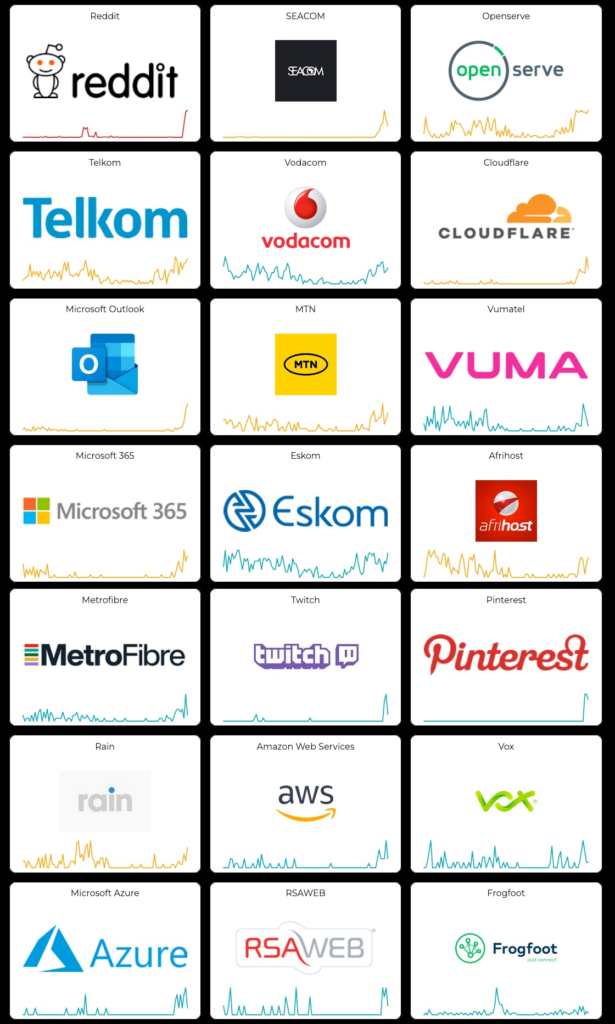
The sheer scale of this campaign has led to widespread collateral damage for everyday internet users. Outage trackers recorded massive spikes in connectivity complaints across multiple consumer services. Major news publications and essential government portals suffered intermittent outages as infrastructure struggled to route traffic. Heavy congestion on shared resources means that businesses not directly targeted are still experiencing severe performance degradation. The entire local digital ecosystem is feeling the strain of these assaults.
• Everyday users are experiencing widespread connectivity issues.
• News sites and government portals suffered intermittent outages.
• Network congestion affects non-targeted local businesses.
Cybersecurity specialists warn these massive disruptions might serve as smokescreens for deeper network breaches. Providers like Seacom found no evidence of data theft so far, noting their protection systems functioned correctly during the surge. Experts strongly advise tech companies to prioritize stabilizing services while preparing for subsequent targeted strikes. Tracking the precise motives of the perpetrators remains incredibly difficult without direct communication. The tech industry must remain exceptionally vigilant against future complex attacks.
• Disruptions are sometimes used to hide deeper data breaches.
• Providers successfully defended against widespread data theft.
• Experts advise preparing for future targeted cyber strikes.
Via: MyBroadBand


