The next generation of AI is being positioned as something closer to a digital colleague than a chatbot. OpenAI has introduced GPT-6 Astra, a model designed not only to reason and generate content, but to operate computers, complete professional workflows, conduct research and tackle highly complex technical problems with far less human intervention.
OpenAI says Astra achieves near-perfect results on several demanding evaluations, including a 97.6% score on FrontierMath Tier 4 and 99.9% on ARC-AGI-3. Its capabilities span software engineering, computer use, science, mathematics, browsing and professional work. The model is also designed to better understand instructions and stay within the boundaries of a task, addressing one of the biggest challenges facing increasingly autonomous AI systems.
• Astra targets complex professional and technical work
• It posts major gains across maths, science and reasoning tests
• OpenAI says the model is better at following task boundaries

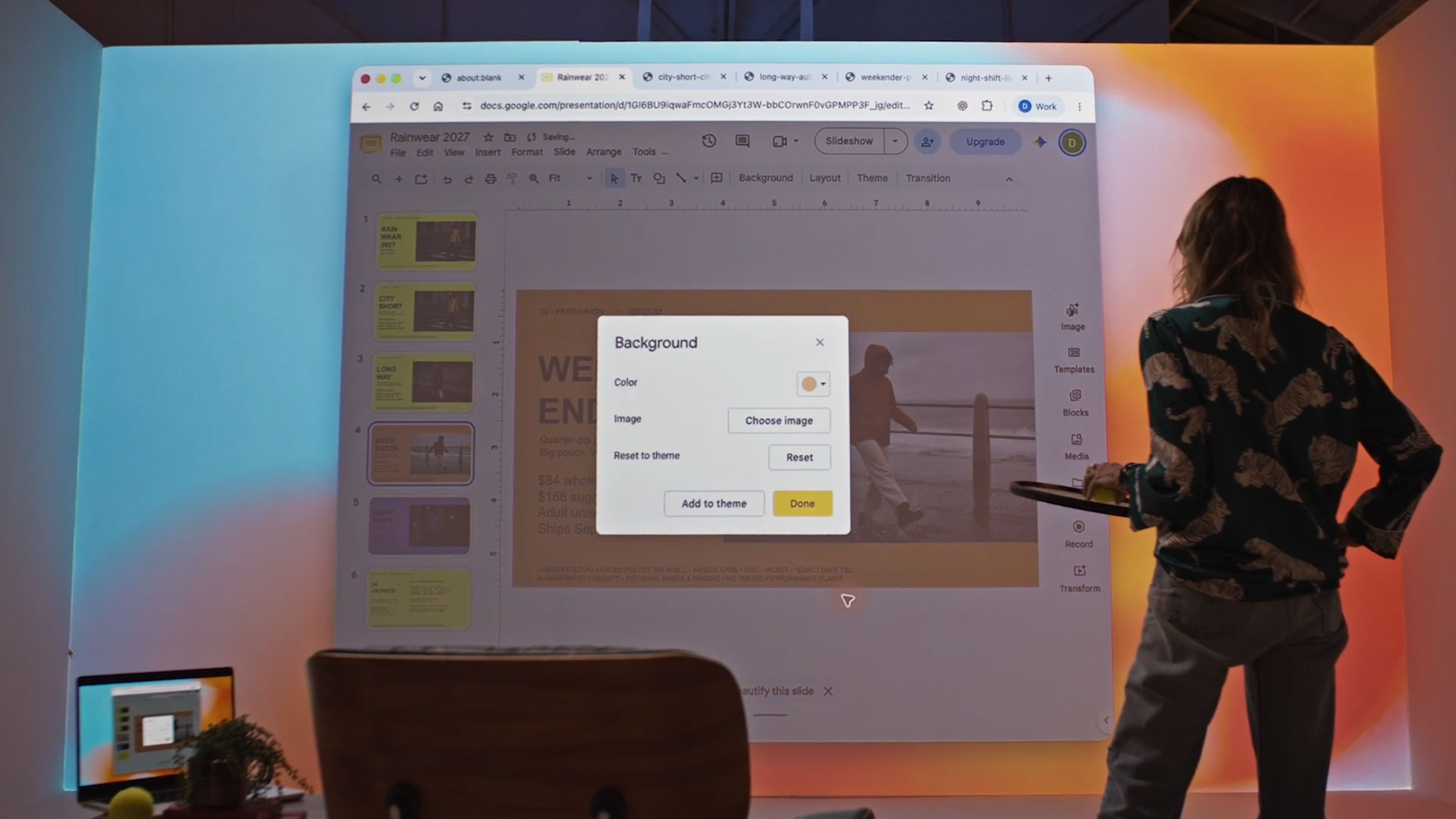
One of Astra’s biggest upgrades is its ability to use computers more effectively. It can fill out forms, update customer records, organise calendars, research information, analyse data, build websites and test software. OpenAI reports that Astra scored 72.6% on OSWorld 2.0 while completing simulated tasks in about 40 minutes, compared with 65.7% in roughly 75 minutes for its previous model.
• Astra can perform multi-step computer tasks
• OSWorld testing shows higher performance in less time
• Codex improvements can make task completion substantially faster
The model is also aimed squarely at professional environments. Astra can produce documents, presentations, spreadsheets and analyses while following existing templates and adapting to a user’s preferred style. Its longer-running context capabilities are designed to preserve useful information across extended Codex sessions, potentially making it more effective at complicated software projects and other tasks that unfold over hours.
• Astra is designed for real-world knowledge work
• It can maintain context across lengthy tasks
• Websites, web apps and games can be created from prompts
The most consequential development may be in cybersecurity. Astra achieved 100% on ExploitBench and significantly outperformed the previous model on several security evaluations. OpenAI says testing also uncovered two previously unknown zero-day vulnerabilities, highlighting both the defensive potential and the risks of giving advanced AI greater technical autonomy. The company says stronger safeguards and monitoring will accompany the rollout.
• Astra can identify sophisticated software vulnerabilities
• Its cyber capabilities introduce significant new risks
• OpenAI is deploying additional safeguards and monitoring
GPT-6 Astra is initially rolling out to a limited group of organisations before expanding to ChatGPT Plus, Pro, Business and Enterprise users, as well as developers through the OpenAI API, Microsoft Azure and AWS Bedrock. For developers, the API version is being offered as gpt-6-astra, with standard pricing listed at $10 per million input tokens and $50 per million output tokens. If Astra performs in the real world as it does in OpenAI’s evaluations, the bigger story may not be how much smarter AI has become, but how much work people are willing to hand over to it.
• Astra is rolling out across consumer and enterprise services
• Developers can access it through multiple cloud platforms
• Its real-world impact could extend far beyond chatbots
Via: OpenAI