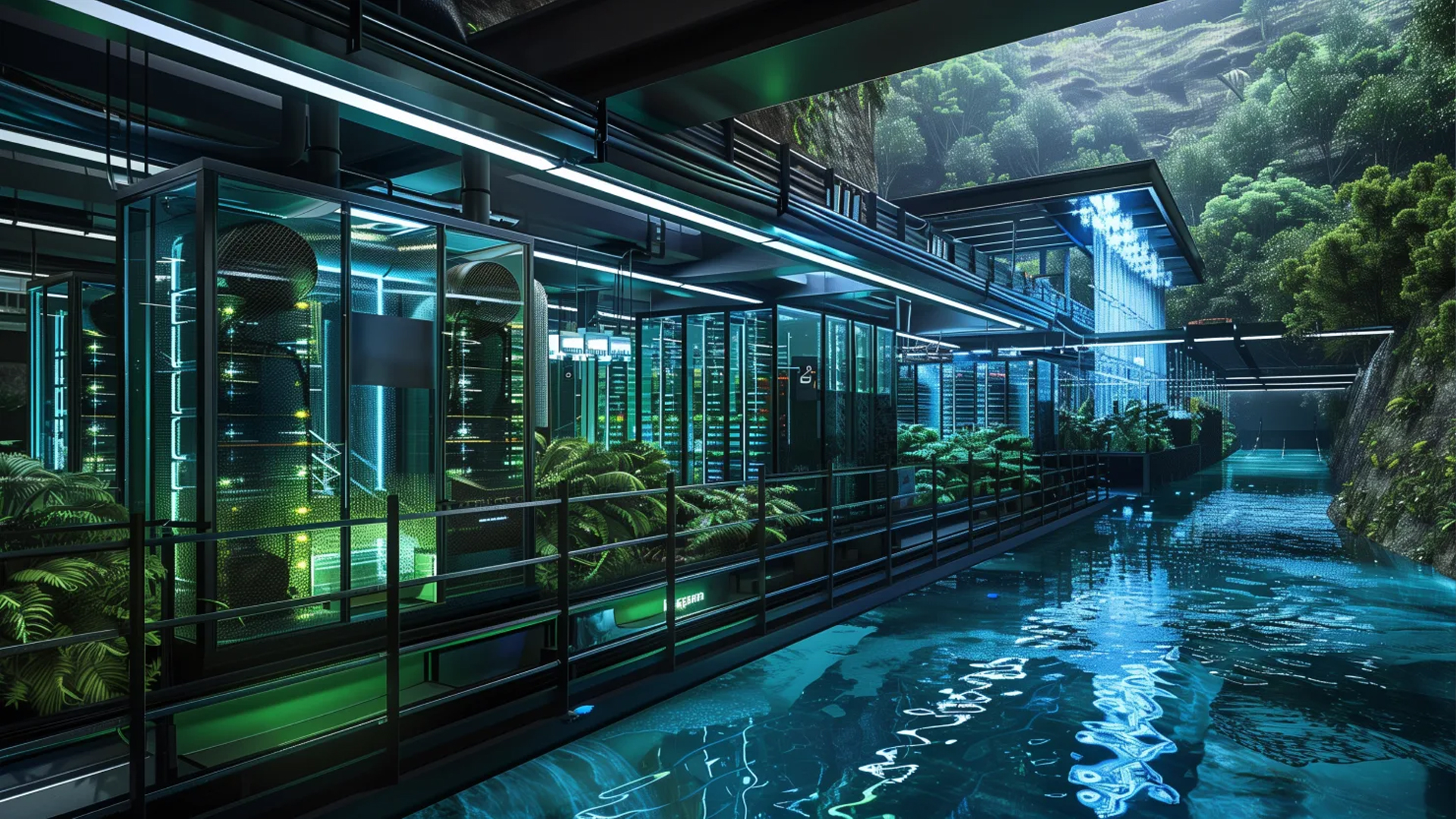
Artificial intelligence, the new engine of global innovation, has turned data centers into industrial-scale furnaces. Their appetite for energy and water is transforming once-ignored server farms into one of the defining environmental and economic battlegrounds of the decade.
• Rising AI demand is straining global energy infrastructure
• Data centers are becoming major environmental concerns
• AI is forcing a reimagining of digital infrastructure
Researchers warn of a looming crunch where current data center models simply cannot cope. New studies show that nearly half of existing facilities fail to meet sustainability requirements. Some of the latest proposed solutions look like scenes from a speculative future. Engineers envision underground data hubs tucked into abandoned bunkers or massive structures suspended in open air to drink directly from solar energy. In urban “data villages” heat from server stacks could warm homes and schools, while “data spas” could recycle that same heat into wellness centers before channeling it back into cooling systems.

• Study reveals sustainability failures in current data centers
• Concepts include underground hubs, aerial facilities and heat recycling
• Adoption delayed by cost, regulation, legal barriers
Pragmatism has rarely looked so ambitious as engineers push plans beyond Earth entirely. Tech giants and aerospace startups are racing toward orbital computing with chips already launched into space and robotic systems being developed to assemble data centers in orbit. Billions in public and private funding are testing whether the vacuum of space could become the ultimate cooling system. Yet the price of launches and the difficulty of maintaining hardware orbiting above the atmosphere make these visions remain financially out of reach for now.
• Space-based data centers are being tested
• Companies are investing in orbital computing research
• Costs and maintenance challenges limit near-term deployment
These ideas are not only about energy and efficiency but identity. For years communities saw data centers as lifeless gray boxes draining water and power without giving anything back. Designers now aim to reshape that perception, making digital infrastructure visible, beautiful, and mutually beneficial. Heat loops, biomimicry, and modular architecture are part of a strategy to transform the machine that powers the digital world into a quiet neighbor instead of a burden.
• Communities resist unattractive and resource-draining facilities
• New architectural philosophies aim to merge nature and infrastructure
• Heat and design principles can support community use
Experts agree that none of this can exist without policy catching up. Electrical grids must expand. Renewable power must grow. Laws must evolve so innovation is possible and sustainable ideas can become financially viable. Leaders warn that patching old systems is not enough. What comes next requires imagination on a planetary scale and decisions that could determine whether artificial intelligence accelerates progress or overwhelms the world that sustains it.
• Regulation and grid upgrades are essential
• Financial justification will drive adoption of innovations
• Incremental fixes are insufficient for long-term AI demand