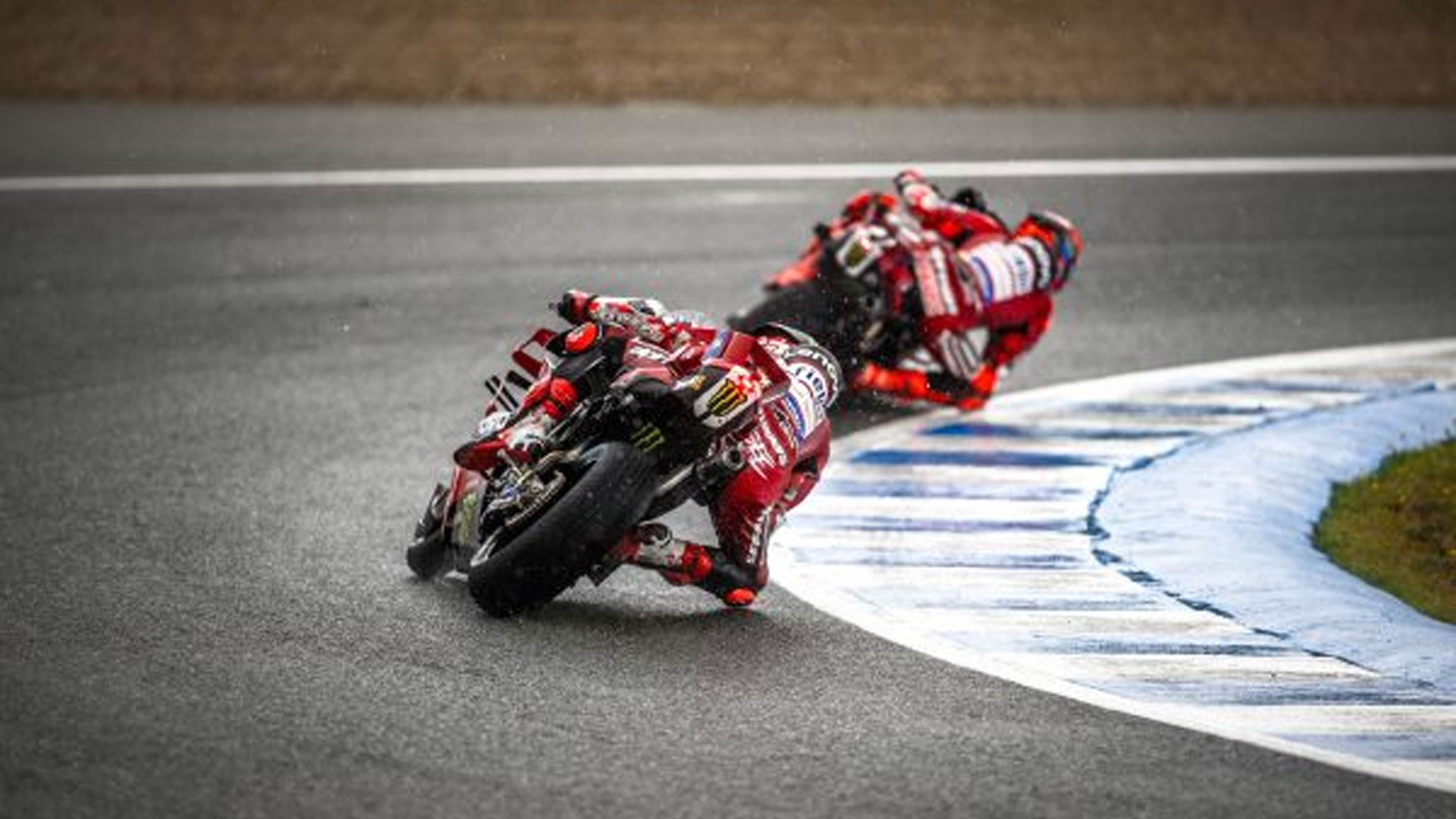
MotoGP is heading for one of its biggest technical shake-ups in years, and Ducati is already building the machine that could define the next era. The 2027 rules will shrink engines to 850cc, restrict aerodynamics, ban ride-height devices, introduce fully sustainable fuel and bring a new tyre supplier. For Ducati Corse, that means developing an almost entirely new Desmosedici GP while still fighting for the 2026 championship.
• Ducati is preparing a radically redesigned 2027 Desmosedici GP.
• New rules will transform engines, aerodynamics, fuel and tyres.
• Ducati must develop its current and future bikes at the same time.
That engineering challenge has pushed Ducati deeper into high-performance computing. The team has expanded its Lenovo computing infrastructure to deliver more than 108 TFLOPS of theoretical double-precision performance. The upgrade roughly doubles available memory compared with the previous generation while adding about 48% more processing power, giving engineers greater capacity to test ideas before they ever reach a racetrack.

• Ducati now has more than 108 TFLOPS of computing performance.
• The upgraded system provides substantially more memory.
• Engineers can investigate more designs without immediately building parts.
The extra computing muscle is particularly important for the new 850cc engine. Engineers are using simulations to refine components and systems including the intake, thermal management, connecting rods and crankshaft. Three-dimensional engine CFD simulations can now be completed in roughly half the previous time, while structural analysis has been cut by around 30%, allowing Ducati to examine more designs before committing to physical prototypes.
• Engine development is being heavily driven by computer simulations.
• CFD simulation times have been reduced by about 50%.
• Structural analysis now takes around 30% less time.
Aerodynamics presents another major challenge. MotoGP limits on-track testing, making it difficult to test every possible design using physical prototypes. More powerful simulations allow Ducati to recreate increasingly complex riding conditions virtually, helping engineers understand how changes in aerodynamic performance could affect the motorcycle as a whole before parts are manufactured and tested.
• Computer modelling helps overcome limited track testing.
• Ducati can simulate increasingly realistic aerodynamic conditions.
• More promising designs can reach the track without wasting development time.
The result is a development race happening largely before the public sees the finished motorcycle. Ducati can continue refining its 2026 Desmosedici GP while simultaneously building its 2027 successor, using computing power to shorten the journey from an engineering idea to a physical component. With MotoGP preparing for such a major technical reset, the next Ducati may be shaped as much by supercomputers as it is by what happens on the circuit.
• Ducati is developing its 2026 and 2027 bikes in parallel.
• Faster simulations can reduce prototype development time and costs.
• High-performance computing is becoming a crucial part of MotoGP engineering.
Via: Lenovo News