

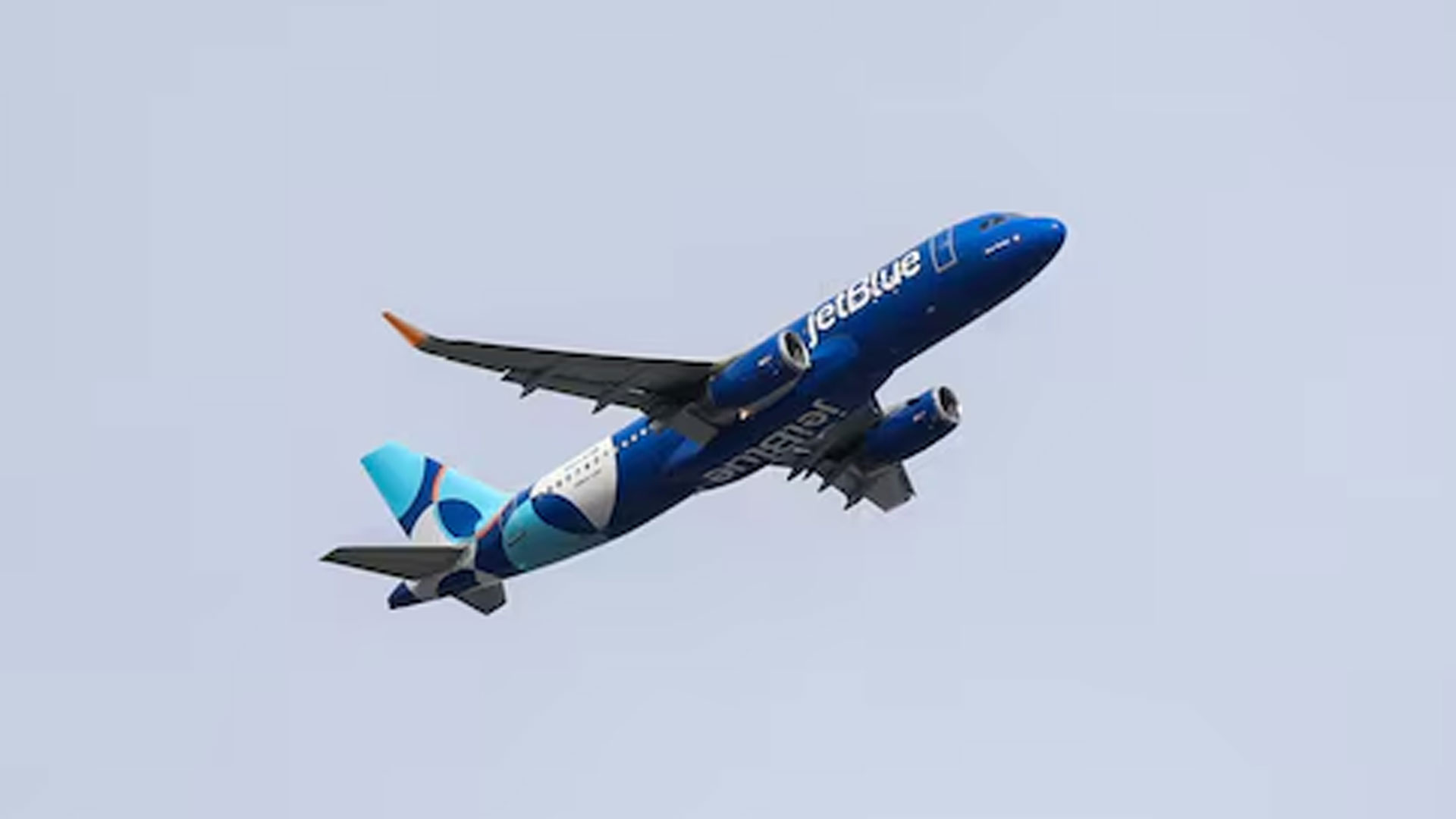
The sky above the Caribbean briefly turned into a test of reflexes rather than routine, as a commercial jet carrying passengers toward New York was forced to maneuver to avoid catastrophe. What unfolded mid-flight exposed how thin the margin for error can be when civilian aviation intersects with military operations.
• Incident occurred during a routine international flight
• Evasive action was required to maintain separation
• Safety systems became the focal point immediately
JetBlue Flight 1112 had departed Curacao and was cruising roughly 40 miles off the coast of Venezuela when its crew detected a U.S. Air Force tanker aircraft flying at a similar altitude. The military jet was operating without an active transponder, limiting its visibility to civilian tracking systems and forcing the JetBlue crew to react quickly to avoid a collision.

• Aircraft were flying at comparable altitude
• Military jet lacked active transponder signal
• Crew response prevented escalation
The near miss echoed fresh memories on Capitol Hill, coming weeks after a deadly January collision near Washington, DC that killed 67 people. Lawmakers quickly tied the JetBlue incident to broader concerns about gaps in aircraft tracking, especially when military flights operate near commercial routes without broadcasting standard location data.
• Recent fatal crash sharpened scrutiny
• Lawmakers linked events to tracking failures
• Airspace coordination raised as a concern
JetBlue confirmed the crew followed established safety procedures and formally reported the incident to federal authorities. The airline emphasized training and rapid communication as central to preventing loss of life, while preparing to cooperate with any investigation that follows.
• Incident reported to regulators
• Crew actions aligned with protocol
• Investigation expected
The event unfolded amid heightened U.S. military activity in the southern Caribbean as tensions with Venezuela continue to rise. With airlines already warned to exercise caution in the region, the episode adds urgency to questions about how civilian and military aircraft share crowded skies during periods of geopolitical strain.
• Regional tensions form the backdrop
• Airlines previously warned about risks
• Airspace safety now under renewed pressure


