

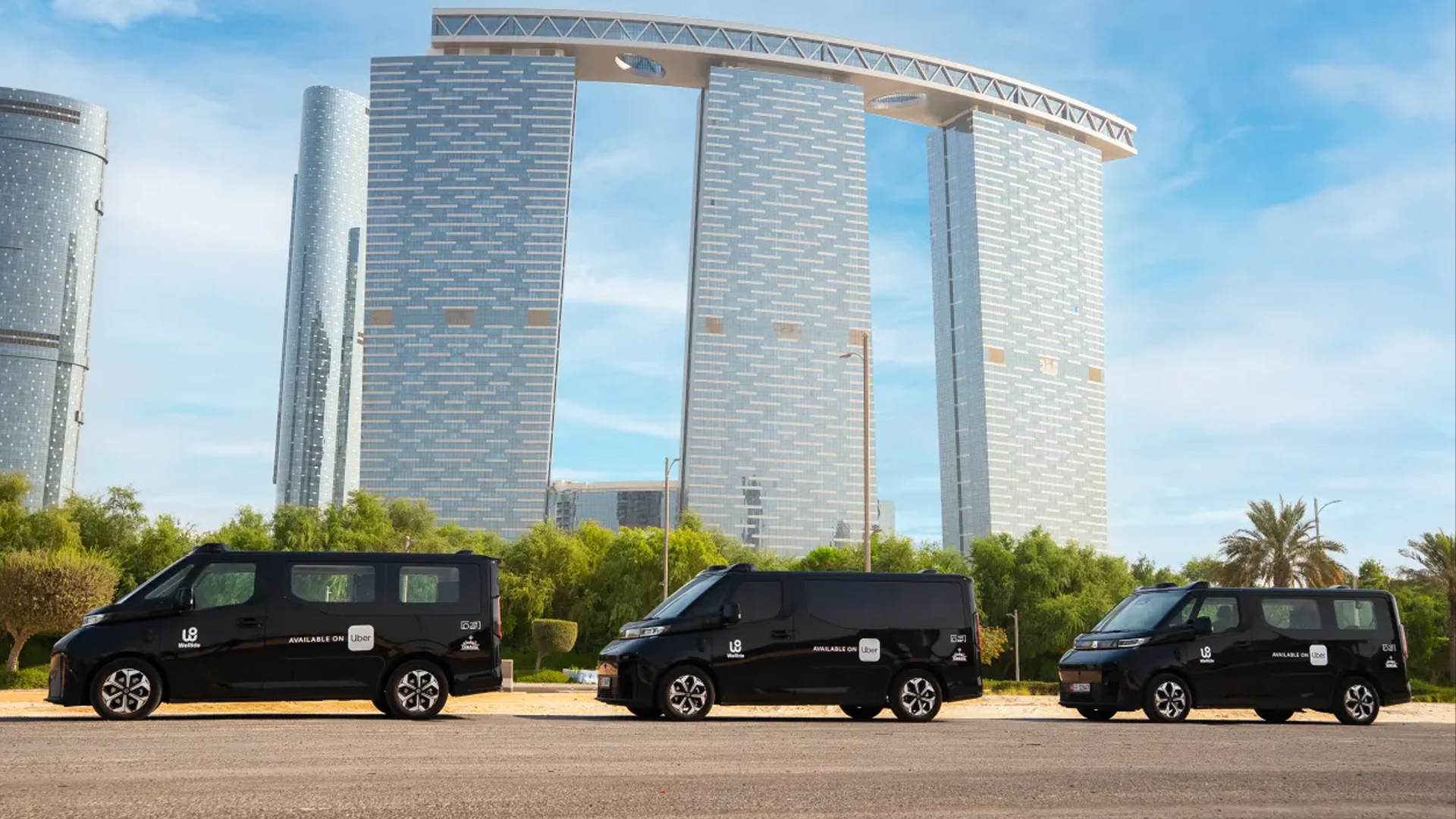
The back seat is empty now. No hands on the wheel, no driver in the mirror, only a silent car gliding through the streets of Abu Dhabi. Uber switched on a new chapter in its global expansion, launching fully driverless robotaxi rides across the UAE capital in partnership with Chinese autonomous vehicle developer WeRide. It marks the first time the Middle East has seen a commercial robotaxi service on public roads.
• Uber launches fully driverless rides in Abu Dhabi
• First Middle East market for robotaxis
• Partnership with autonomous tech firm WeRide
The rollout allows riders to request a WeRide-powered autonomous vehicle using standard categories like UberX and Uber Comfort. The cars are already operating across Yas Island, with users able to increase their chances of securing a robotaxi by selecting the autonomous preference when booking. Support remains available through in-car tablets and the app, but the vehicles themselves are designed to operate without safety drivers.

• Robotaxi available under standard Uber booking options
• Service currently limited to Yas Island areas
• Remote support available during trips
This deployment follows nearly a year of testing in the UAE, where WeRide previously operated with safety operators in vehicles. The companies first aligned in 2024 and have since expanded autonomous trials to Riyadh. Uber now intends to take the technology across 15 additional cities in the next five years, including markets in Europe. In the United States, robotaxi fleets are already running in Phoenix, Austin, and Atlanta through collaborations with Waymo.
• WeRide testing in UAE began last year with human operators
• Expansion planned to 15 more global cities
• U.S. deployments already active in three major markets
Autonomous transportation has become a competitive race among mobility giants. Uber recently signed long-term partnerships with Nuro and electric manufacturer Lucid to reinforce its robotaxi ambitions, while Lyft is working with Waymo to bring its own driverless taxis to Nashville next year. For now, no revenue-sharing models have been disclosed, but scaling is accelerating across several regions.
• Uber continues to build autonomous partnerships
• Lyft pursuing similar robotaxi rollout
• Revenue model between partners remains undisclosed
Abu Dhabi’s launch positions the UAE as a proving ground for driverless mobility in a region known for rapid adoption of emerging technology. What begins on Yas Island could soon extend outward, rewriting the future of urban transport. Riders may not see a driver when they step inside, but what they are looking at is something far larger: a glimpse of a driverless global network in motion.
• UAE becomes early adopter in autonomous mobility
• Future expansion beyond Yas Island likely
• Rollout hints at a broader global shift toward driverless fleets


Granddads everywhere are gonna start freaking out