Gaming laptops often force users to choose between portability, battery life and raw performance. Microsoft’s new Surface Laptop Ultra aims to change that equation, packing powerful graphics hardware into a slim metal body. If its biggest promises hold up, this could be the kind of Windows laptop that gamers and creative professionals have been waiting for.
• Microsoft is targeting users who want power without a bulky laptop.
• The Surface Laptop Ultra combines an ARM-based processor with Nvidia graphics technology.
• Battery life and gaming performance will be crucial to its success.
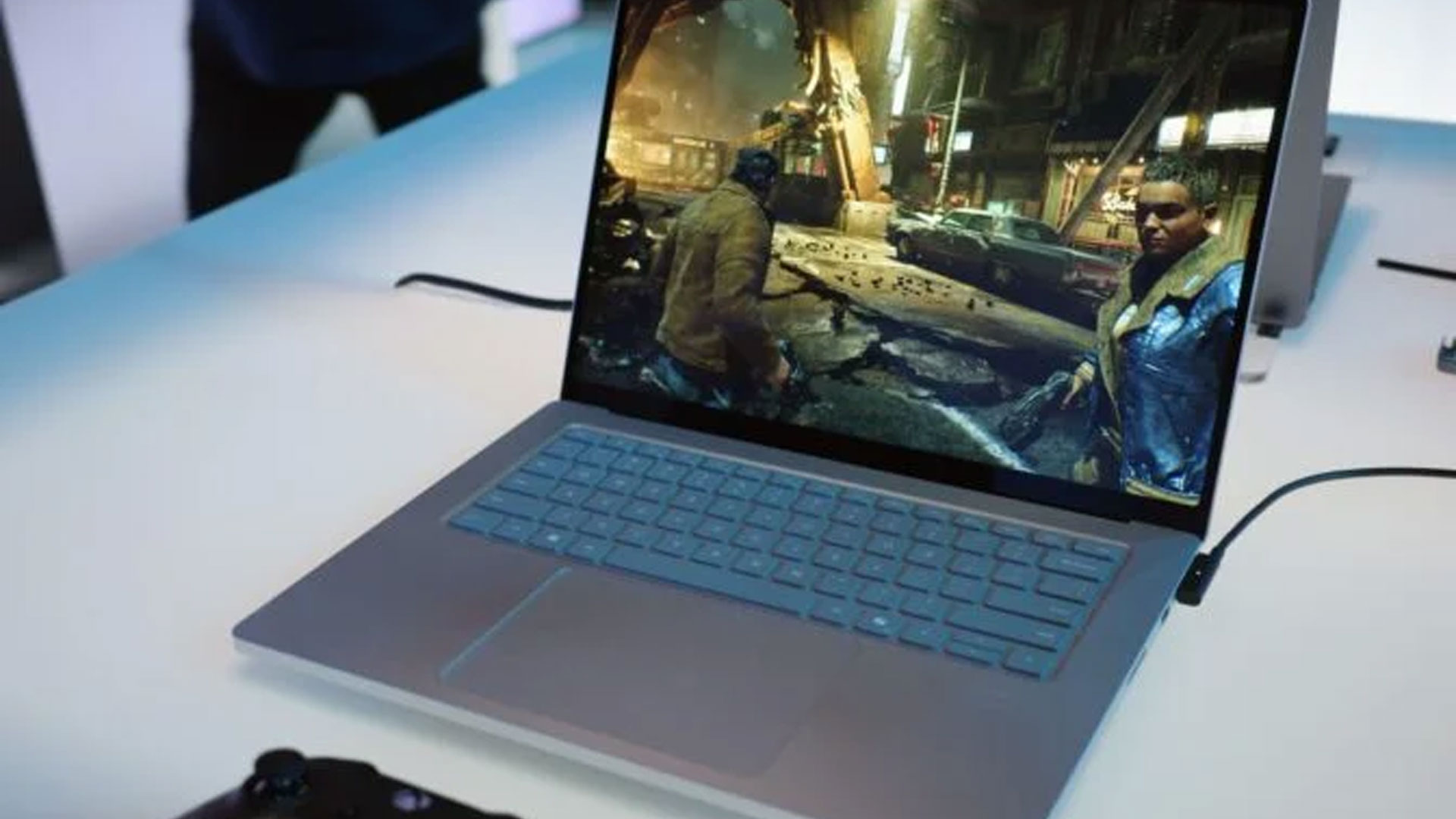
The laptop is powered by Nvidia’s N1X chip, developed in collaboration with MediaTek, and is designed to compete with Apple’s MacBook Pro. During an early demonstration, the device ran Gears of War: E-Day at around 60 frames per second using medium graphics settings and DLSS upscaling. Microsoft also demonstrated performance reaching 120 frames per second with frame generation on its 15-inch mini-LED display.

• The N1X chip brings Nvidia graphics capabilities to the laptop.
• Early gaming demonstrations showed promising performance.
• The screen supports refresh rates of up to 120Hz.
There is, however, an important catch. The demonstrated game ran through Microsoft’s Prism emulator, which allows software designed for traditional x86 processors to run on ARM-based systems. Emulation can affect performance and compatibility, so the results do not guarantee that every game will run equally well. Microsoft has yet to confirm whether a native ARM version of the game will be available.
• Gaming performance still needs more extensive testing.
• Emulation could introduce compatibility issues or performance limitations.
• Native ARM support remains an important unknown.
The hardware itself offers several practical advantages. The metal chassis measures just 0.7 inches thick, while the laptop includes multiple ports and a full-size SD card reader. Its magnetic USB-C charging connection supports up to 140W, while Microsoft claims the machine can maintain 99% of its GPU performance when running on battery power. If independent testing confirms that claim, it could address a major weakness of traditional gaming laptops, which often rely on powerful external chargers.
• The slim design combines portability with a substantial selection of ports.
• Magnetic USB-C charging supports up to 140W.
• The claimed battery-powered GPU performance remains to be verified.
Price could be the biggest obstacle. The entry-level model starts at $2,600, offering 24GB of unified memory and 512GB of storage. Higher configurations reach $3,300, while models with up to 128GB of memory could approach $6,000. Microsoft is also targeting AI developers with demonstrations of on-device AI workflows, although some capabilities may still depend on cloud-based services. The Surface Laptop Ultra and other RTX Spark PCs are scheduled to launch on October 16, 2026. Until longer-term testing reveals the real-world battery life, gaming compatibility and performance, this ambitious laptop remains a promising proposition rather than a proven all-rounder.
• Prices range from $2,600 to potentially $6,000.
• AI developers are among the key audiences for higher-end models.
• The launch is scheduled for October 16, 2026, with real-world performance still to be established.
Via: Gizmodo