TianGong Ultra has already beaten one of the most famous records in athletics, yet the robot’s most important test may have nothing to do with running. After sprinting 100 metres in 8.64 seconds at the World Humanoid Robot Games, the machine’s developers are now trying to answer a far tougher question: can a robot built to move at extraordinary speed become reliable enough to do useful work?
• TianGong Ultra ran 100 metres in 8.64 seconds.
• Its developers are shifting attention from speed to reliability.
• The bigger goal is putting humanoid robots to work in the real world.
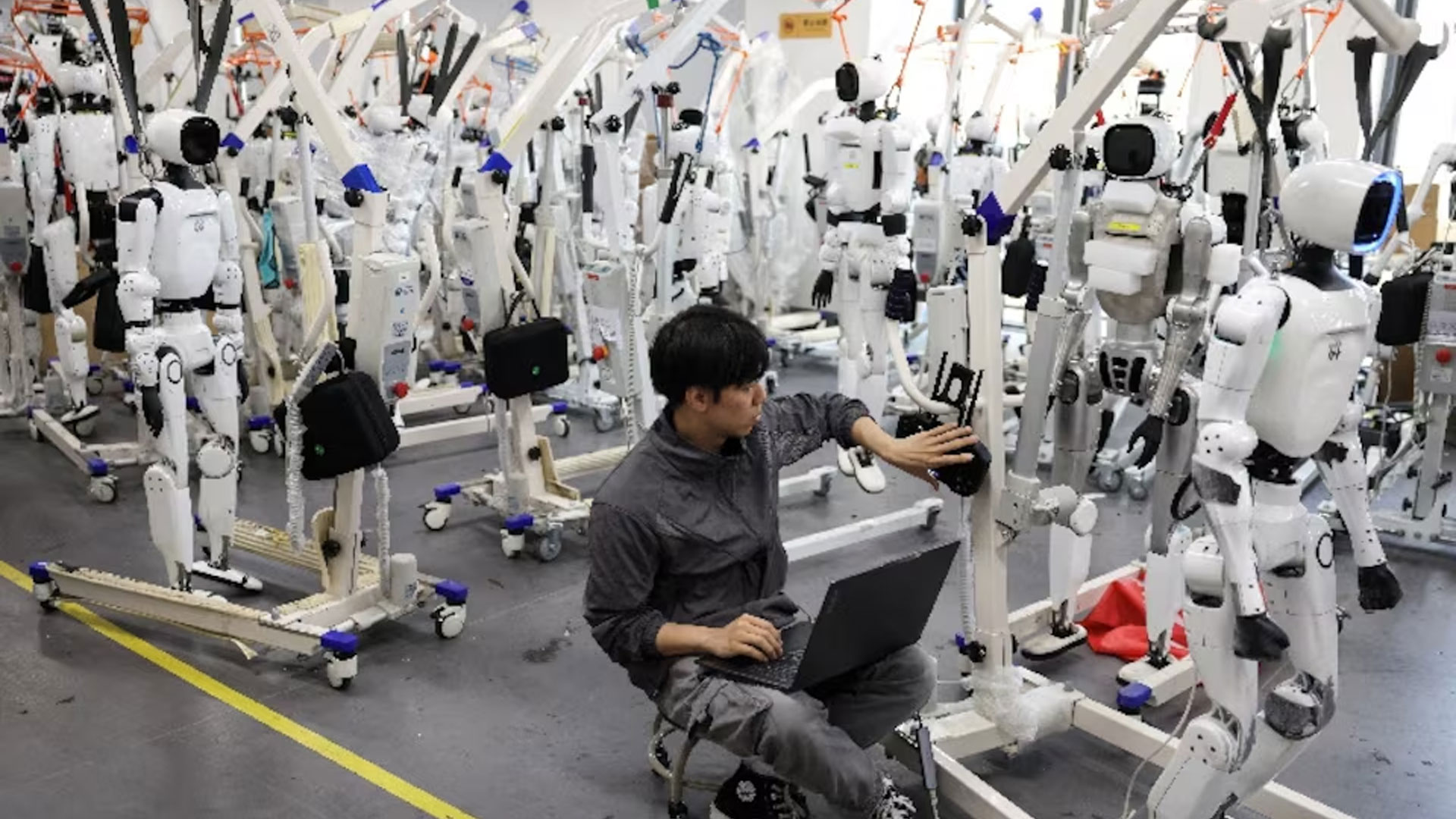
The achievement highlights the rapid progress of China’s humanoid robotics industry, where government support, powerful manufacturing networks and intense competition are pushing machines forward at remarkable speed. Inside Beijing’s X-Humanoid robotics centre, however, the glamorous record looks very different. Engineers work around suspended robots, repair damaged legs and test movement systems repeatedly, revealing how much effort is still required to turn impressive demonstrations into dependable machines.

• China is rapidly expanding its humanoid robotics industry.
• Engineers constantly test and repair machines during development.
• The industry still faces a major gap between demonstrations and practical use.
TianGong Ultra was never created simply to win a race. Its extreme running ability was designed to improve the robot’s overall mobility, helping it cope with different surfaces and movements. A smaller TianGong model has already climbed from the first floor to the 17th floor of the company’s headquarters, while other robots have been tested carrying boxes in industrial environments. Smaller humanoids could eventually handle commercial services and light industrial tasks, while larger machines may be suited to inspections and emergency operations.
• Running helps robots develop more advanced movement abilities.
• Smaller humanoids are being tested for commercial and industrial work.
• Larger robots could eventually assist with inspections and rescue missions.
The record itself was the result of relentless experimentation. Ultra entered the competition with several computer-trained running strategies, with engineers switching and refining them between races. The robot improved from 9.39 seconds in its preliminary run to 8.86 seconds in the semifinal before reaching 8.64 seconds in the final. Behind those numbers were damaged machines, overnight testing and constant adjustments to balance, navigation and acceleration.
• Ultra became faster with each stage of the competition.
• Engineers tested different running strategies before the final.
• Crashes and mechanical failures remain part of humanoid robot development.
Speed, however, creates a problem of its own. Ultra weighs around 75kg and can exceed 17 metres per second, making stopping safely extremely difficult. Future versions will need better braking, lighter construction and safer ways to handle sudden movement. That challenge points to the real race now facing China’s humanoid robotics industry: building machines that are not merely capable of spectacular feats, but dependable enough to operate alongside people every day.
• Ultra’s extreme speed makes braking a serious challenge.
• Future models will need safer and more reliable designs.
• The next breakthrough could be useful work rather than another racing record.
Via: Reuters