The AI boom is creating a surprising new pressure point: the humble power transformer. As data centers demand enormous amounts of electricity, the technology that moves and converts that power is suddenly becoming a critical bottleneck. A newer type of transformer could help change that, while opening the door to a faster, more flexible power grid.
• AI data centers are driving electricity demand
• Traditional transformers face major supply constraints
• New technology could modernize power conversion
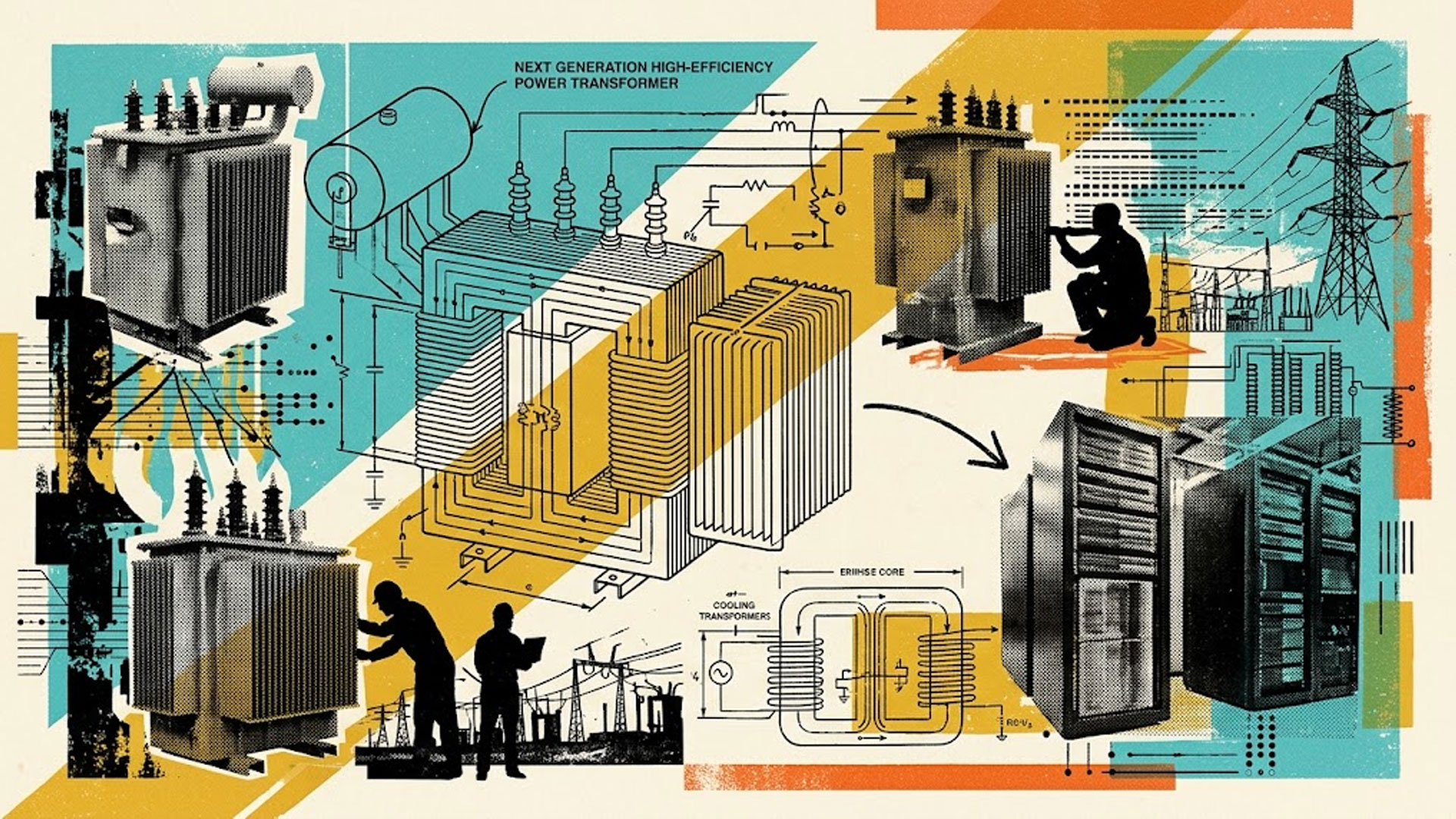
Conventional power transformers have relied on a design that dates back to the 1880s. Large units use copper coils and steel cores to raise or lower alternating-current voltage. Their size and complex, largely manual manufacturing process mean they are typically custom-built, leaving utilities waiting years for new equipment as they race to expand and replace aging grid infrastructure.

• Traditional transformers are difficult to mass-produce
• Utilities can face lengthy delivery times
• Grid expansion is adding to the pressure
Solid-state transformers take a radically different approach. Instead of relying solely on traditional electromagnetic components, they use high-frequency semiconductor switching to convert electricity. Semiconductor materials such as silicon carbide could allow these units to be mass-produced, while their smaller, lighter and modular designs make them easier to upgrade and deploy.
• Solid-state transformers use power electronics
• Smaller designs could save valuable space
• Modular construction could simplify upgrades
AI data centers are emerging as an ideal proving ground because many are moving toward direct-current power systems for energy-hungry AI servers. Solid-state transformers can convert grid-supplied alternating current directly into the DC power these facilities need, potentially eliminating separate conversion equipment. Several US startups are now attracting major investment, with Amperesand, Heron Power and DG Matrix collectively raising more than $280 million over the past year.
• Data centers could accelerate commercial adoption
• One device can combine several power functions
• More than $280 million has flowed into the technology
The potential impact extends far beyond AI. Researchers at North Carolina State University have demonstrated a solid-state transformer handling up to 1 megawatt for electric vehicle charging, combining voltage reduction and AC-to-DC conversion in a compact system. If manufacturers can overcome remaining engineering and commercialization hurdles, the technology could eventually ease transformer shortages while supporting faster EV charging and even future DC-powered homes.
Via: Arstechnica