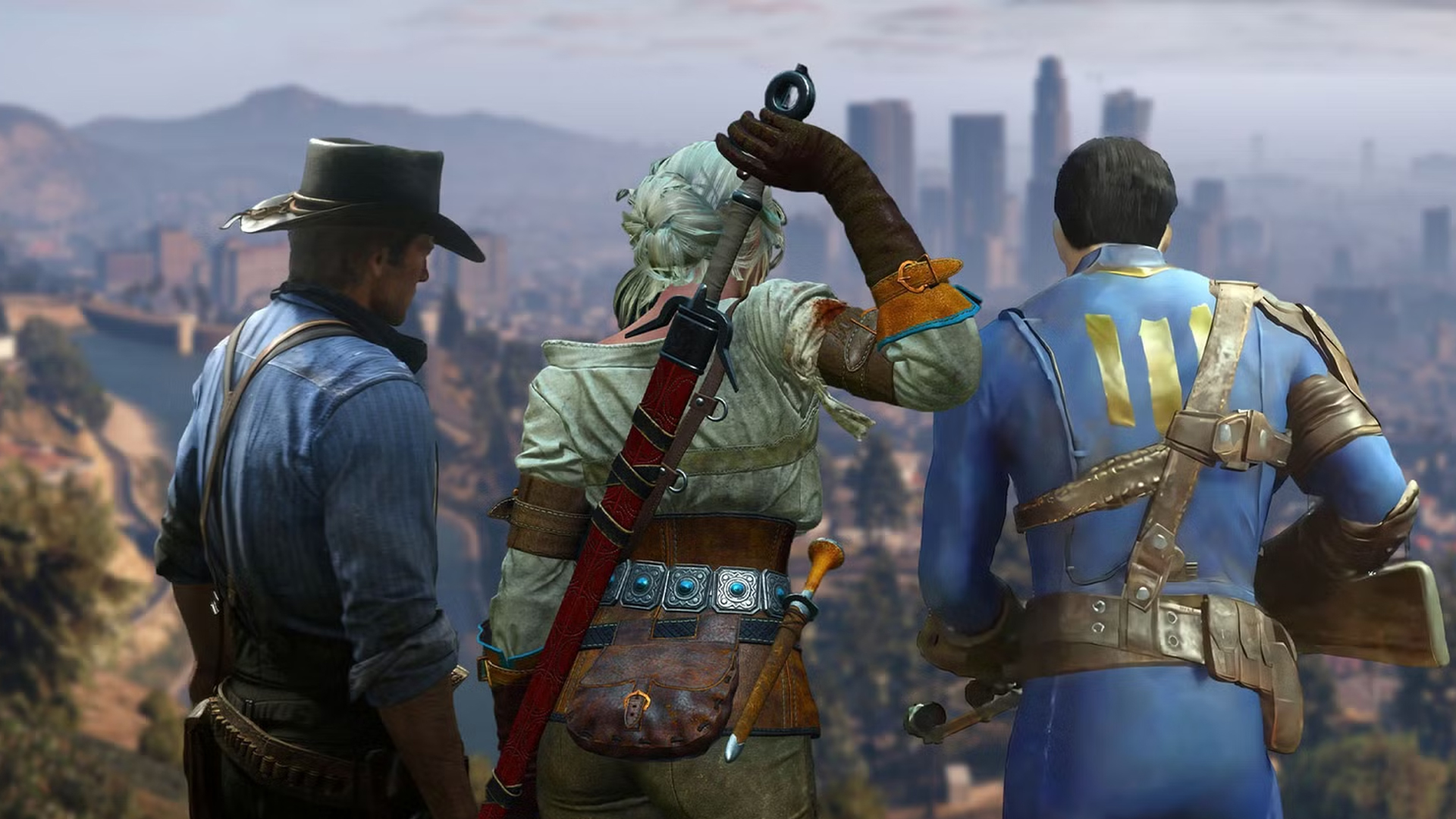
The era of the “forever mountain” is over. For two decades, the video game industry sold a specific dream: if you can see a peak on the horizon, you can walk there, but after years of trudging through procedurally generated wastelands and checking off endless map markers, players are exhausted. The promise of infinite space has curdled into a reality of shallow content, prompting a seismic shift in how the next generation of open-world RPGs is being designed. Developers are finally realizing that a world twice the size of Texas is meaningless if there’s nothing to do in it but collect virtual scrap.
• Open-world fatigue is changing game design.
• Infinite maps are no longer the primary goal.
• Developers are shifting focus from size to depth.
The new frontier isn’t about power, but identity. Players are moving away from the “god-mode” fantasy where a single character becomes master of every guild and wielder of every weapon. Instead, the demand is for reactive worlds that treat a street urchin differently than a corporate executive, much like the untapped potential of Cyberpunk 2077’s life paths. Future titles aim to lock players into specific roles where choices have tangible friction, making the experience of navigating a city as a hated outsider vastly different from walking through it as a celebrated hero.

• Players want identity over god-like power.
• Worlds will react to specific character backgrounds.
• Choices will create friction and unique playthroughs.
Simultaneously, the “endgame” is disappearing in favor of “living” in the game. The rush to defeat a final boss is being replaced by sophisticated simulation mechanics, building homes, managing settlements, and maintaining relationships, that encourage indefinite play. We are seeing a convergence of genres where the DNA of survival games and immersive sims is being spliced into traditional RPGs. This trend suggests that the next Elder Scrolls or Mass Effect will likely prioritize the quiet satisfaction of existing in a digital space over the urgency of saving it.
• The “endgame” is becoming less important.
• Survival and sim mechanics are being integrated.
• Games are designed for indefinite play.
This shift also signals the death of the illusion of choice. Gamers are no longer satisfied with dialogue trees that loop back to the same outcome regardless of what button is pressed. Taking cues from Baldur’s Gate 3 and The Witcher 3, the next wave of open worlds will feature consequences that ripple across the map, permanently altering landscapes and locking off entire questlines based on player action. If you burn down a village in the first act, that settlement and its quests should remain ash in the third.
• Illusion of choice is being rejected.
• Decisions will permanently alter game worlds.
• Actions will lock or unlock future content.
Finally, the industry is pivoting from scale back to craftsmanship. The cautionary tale of Starfield’s vast, procedurally generated emptiness has proven that bigger is not better. We are witnessing a return to tighter, hand-crafted environments where every cave and ruin tells a specific environmental story rather than being a copy-pasted asset. As release cycles stretch into decades and game prices rise, success is no longer measured by the size of the map, but by the density of the experience and the years players spend exploring it.
• Procedural generation is losing favor to hand-crafted design.
• Starfield serves as a cautionary tale against emptiness.
• Density and longevity are the new metrics of success.
Via: Gamerant