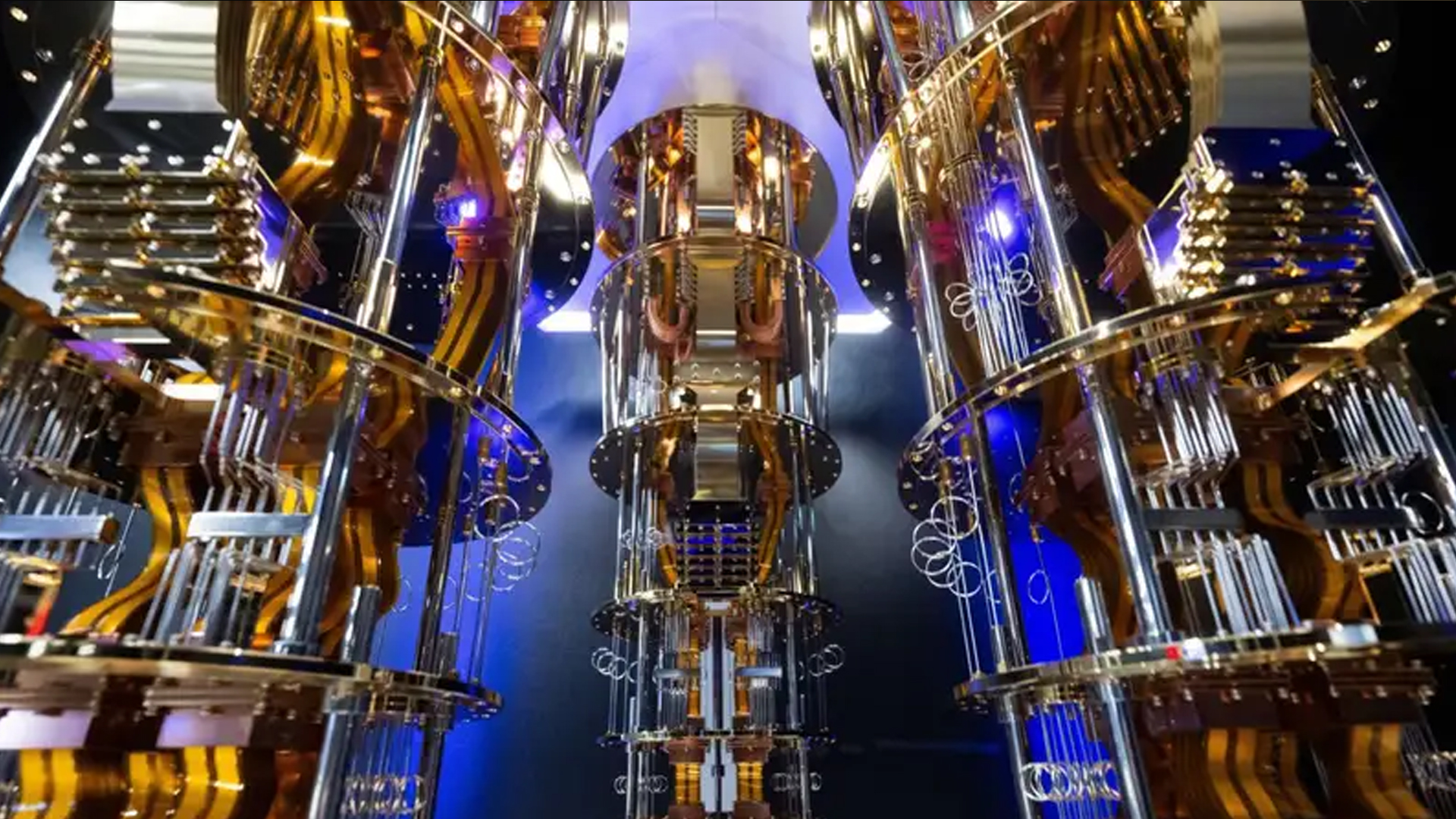
Nature has always kept its deepest playbook written in a code that silicon chips simply cannot read. Everything from the drug in your medicine cabinet to the battery in your car operates on the behavior of subatomic particles, a dance of probability that crashes traditional supercomputers when they try to simulate it. This year marks a potential turning point where we finally stop approximating reality and start computing it, as researchers look to 2026 as the year quantum computers finally tackle practical chemistry.
• Nature operates on complex quantum mechanics. • Traditional computers fail at subatomic simulations. • 2026 could be the breakthrough year.
The fundamental hurdle has always been the electron. These quantum particles do not exist in a single state but rather in a cloud of probabilities that determines how a molecule interacts with the world. Calculating the behavior of these electrons becomes exponentially more difficult as a molecule grows larger, creating a computational wall that even the most powerful supercomputers hit. Industrial and medical chemists are now betting that quantum processors can bypass this wall entirely.

• Electrons exist as clouds of probabilities. • Complexity increases exponentially with molecule size. • Quantum processors aim to bypass computational walls.
Quantum computers operate using the same physical laws as the molecules they are trying to simulate. This alignment allows them to model the structure and reactivity of chemical compounds with a level of precision that binary systems can only estimate. The industry is moving from theoretical physics to practical application, aiming to solve intrinsic quantum problems that have remained unanswered for decades.
• Quantum computers mirror molecular physical laws. • They offer higher precision than binary systems. • The industry is shifting to practical application.
Success in this field would revolutionize how we discover new drugs and materials. Pharmaceutical companies are looking to cut years off the development cycle by accurately predicting how a drug candidate will react within the human body before it ever leaves a computer screen. Material scientists are similarly eager to design more efficient batteries and catalysts by understanding chemical reactions at the most granular level possible.
• Drug discovery cycles could shorten significantly. • Scientists can predict reactions digitally. • New materials like batteries could improve.
This year stands as the ultimate proving ground for the technology. The question of whether quantum computers can solve useful problems is no longer abstract, as specific benchmarks in chemistry are now being tested. Achieving these milestones would prove that quantum computing is not just a scientific curiosity but a necessary tool for the future of industrial innovation.
• 2026 is a proving ground for the tech. • Benchmarks in chemistry are being tested. • Success proves commercial viability.