What if the biggest secrets of the universe are hiding in plain sight, simply because we have not looked at enough of the sky? NASA’s newly launched Nancy Grace Roman Space Telescope is designed to change that, scanning enormous sections of the cosmos to investigate dark energy, dark matter and worlds beyond our solar system.
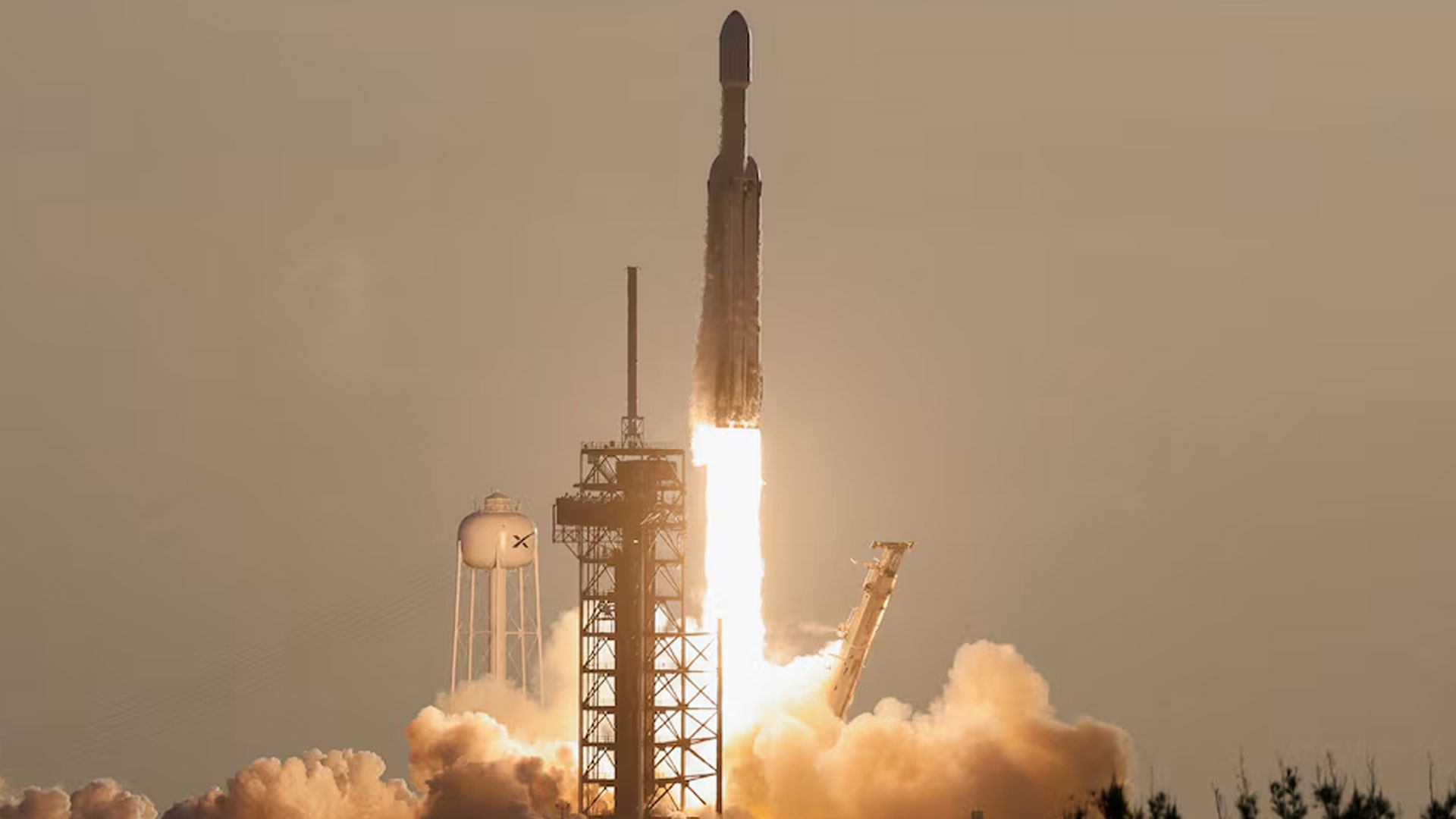
The roughly $4 billion observatory launched from Florida aboard a SpaceX Falcon Heavy rocket and is now beginning its journey toward a point about 1.6 million kilometres from Earth. Its primary mission is planned to last five years, with enough fuel potentially allowing it to operate for another five.
• Roman will study some of cosmology’s biggest mysteries
• The telescope is heading toward Lagrange Point 2
• NASA expects its first images after a 90-day commissioning phase

Roman has an unusual history. The telescope began life as hardware intended for a U.S. spy satellite program before that project was cancelled. NASA received the equipment in 2012 and transformed it into a powerful astronomical observatory. Its launch now marks the beginning of a mission that could reshape our understanding of how the universe works.
• Roman was originally developed for intelligence work
• NASA repurposed the technology for astronomy
• The mission launched nine months ahead of schedule
The telescope’s greatest advantage is its enormous field of view. While the James Webb Space Telescope can zoom deeply into distant parts of the universe, Roman is built more like a cosmic wide-angle camera. It is expected to survey the entire Milky Way in about a month, a task that would take Hubble roughly a century.
• Roman can survey huge areas of space rapidly
• Webb provides deeper views while Roman covers more sky
• The telescope will complement Hubble and Webb
That speed could become crucial in the search for dark matter and dark energy. Roman is expected to map more than two billion galaxies, creating one of the most detailed three-dimensional pictures of the universe ever produced. Scientists will use those observations to investigate the invisible forces shaping cosmic structure and the accelerating expansion of the universe.
• More than two billion galaxies could be mapped
• The survey will help probe dark matter and dark energy
• Roman could reveal how the universe has evolved
Roman will also turn its attention much closer to home, searching for planets orbiting other stars. Scientists expect it to discover thousands of exoplanets and provide an unprecedented statistical picture of planetary systems. The bigger question is what those discoveries will reveal about how common worlds like ours really are.
• Thousands of new exoplanets could be discovered
• Roman will study planetary systems across the galaxy
• Its findings could change how we view our place in the cosmos
Source Link: Reuters