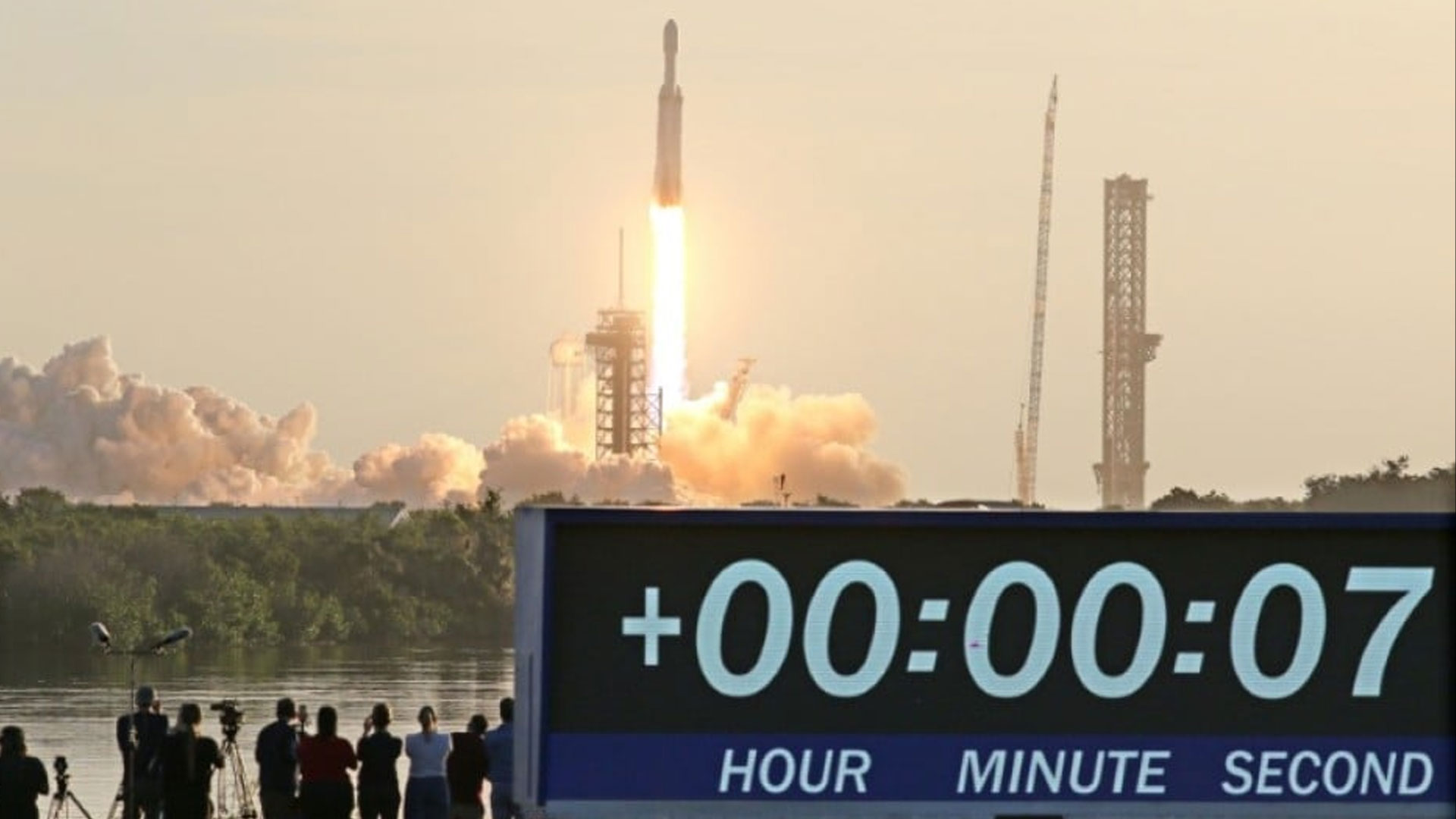
What if our understanding of the universe is wrong? NASA’s newest space telescope is now on a mission that could help answer that question. The Roman Space Telescope launched from Florida aboard a SpaceX Falcon Heavy, beginning a multi-year effort to map enormous sections of the cosmos and investigate some of physics’ biggest unanswered questions.
• Roman launched from Kennedy Space Center
• The mission will run for several years
• Scientists hope it reveals unexpected discoveries
Named after astronomer Nancy Grace Roman, the $4 billion observatory was designed to see the universe on a scale previous telescopes could not. Its field of view is more than 100 times wider than Hubble’s, allowing it to survey huge areas of space rather than focusing on relatively small targets.

• Roman is named after NASA astronomer Nancy Grace Roman
• Its view is dramatically wider than Hubble’s
• The telescope will create a vast cosmic survey
Roman is heading towards a vantage point around 1.5 million kilometres from Earth, where it will use infrared observations to examine light that has travelled across billions of years. The telescope is expected to identify thousands of planets beyond our solar system and tens of thousands of exploding stars, while working alongside observatories such as James Webb, Euclid and the Rubin Observatory.
• Roman will study extremely distant objects
• Thousands of exoplanets could be discovered
• Its observations will complement other major observatories
The biggest prize, however, may be invisible. Dark matter and dark energy are believed to account for roughly 95% of the universe, yet scientists still do not know exactly what they are. Roman’s enormous survey could provide new clues about how the universe expanded and whether current theories about its structure are actually correct.
• Dark matter and dark energy remain major mysteries
• Together they account for most of the universe
• Roman could test existing cosmological theories
Roman will generate around 1.3 terabytes of data every day, creating an enormous resource for scientists and the public. That flood of information could do more than confirm what researchers already expect. The most important discovery may be something nobody saw coming, potentially forcing scientists to rethink how the universe works and opening the door to an entirely new set of questions.
• Roman will produce huge volumes of daily data
• Its findings will be publicly accessible
• Unexpected discoveries could reshape modern cosmology
Via: enca