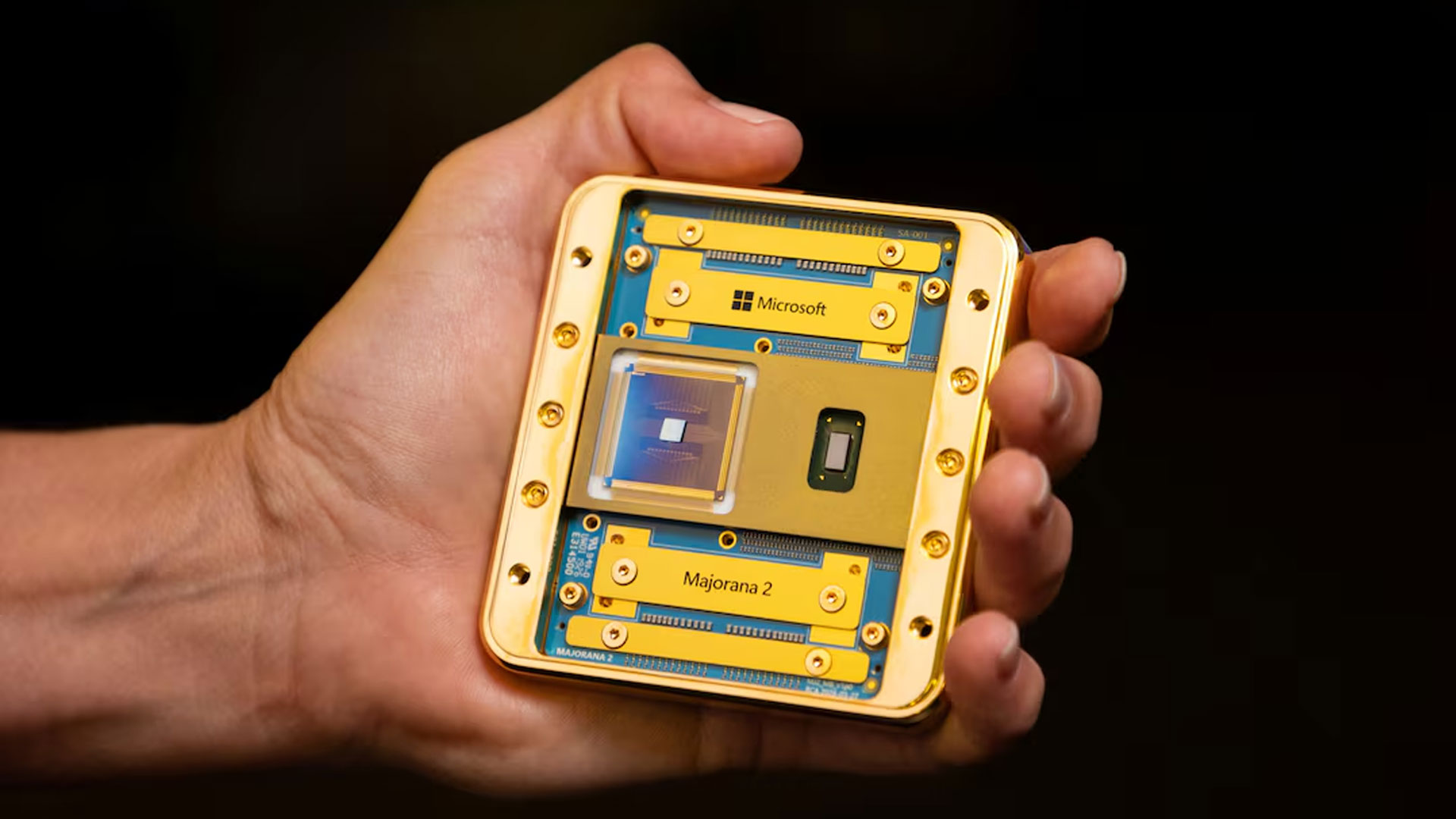
What if the key to unlocking the universe’s greatest mysteries was hidden inside a toxic heavy metal? Microsoft is betting its quantum future on exactly this premise, revealing a revolutionary new chip designed with the help of artificial intelligence. The technology giant announced a firm target date of 2029 to deliver commercially viable quantum machines. This aggressive timeline marks a significant shift from previous vague estimations. The world is now looking at a very real deadline for the arrival of computers capable of solving impossible problems.
• A toxic metal is the key to new technology
• AI helped design a revolutionary new chip
• Commercial quantum machines are expected by 2029
The announcement places Microsoft in a direct collision course with other major industry players. The 2029 target perfectly aligns with the timeline set by IBM, which recently committed a massive ten billion dollar investment to its own quantum endeavors. Technology giants like Google and Amazon are also fiercely competing to develop systems capable of revolutionizing medicine and cybersecurity. Conventional computers would need thousands of years to crack the equations these new machines could solve in moments. The newly unveiled Majorana 2 chip serves as Microsoft’s primary weapon in this escalating technological arms race.
• Microsoft is directly competing with IBM and Google
• Rivals are investing billions into similar projects
• The Majorana 2 chip aims to solve complex equations quickly
A radical departure from standard manufacturing practices makes this new hardware unique. Most competitors rely on aluminum to create superconducting wires for their quantum systems. Microsoft utilized its own artificial intelligence tools to discover that lead offered far superior properties for its specific architecture. Implementing this larger atom resulted in a massive performance improvement over the first generation chip. Engineers successfully conquered the complex challenge of processing water-soluble lead without it dissolving during the delicate manufacturing phase.
• The new chip uses lead instead of aluminum
• AI tools enabled this major materials breakthrough
• The switch resulted in massive performance improvements

The foundation of this technology rests on highly controversial scientific ground. The entire system depends on quasiparticles known as Majoranas, elements that were entirely theoretical until recently. The physics community remains highly skeptical of these discoveries due to a distinct lack of verifiable public data. Several academic publications have previously investigated the company’s research protocols regarding these specific scientific claims. Independent experts continue to stress that fundamental principles require all results to be thoroughly reproducible by outside observers.
• The technology relies on controversial quasiparticles
• The physics community remains highly skeptical
• Experts demand reproducible and public data
Corporate secrecy currently prevents widespread peer review of these breakthroughs. Leadership maintains that releasing comprehensive data would compromise vital trade secrets in a highly competitive market. Extensive confidential reviews are reportedly ongoing with advanced defense research agencies in the United States to verify the technology. The company remains steadfast that the underlying physics are thoroughly proven despite the external academic pushback. Millions of dollars in engineering investments are currently flowing based on the strict confidence in these heavily guarded scientific results.
• Trade secrets prevent the release of public data
• Defense agencies are confidentially reviewing the technology
• The company remains confident in its underlying physics
Via: Reuters