Does the successor to the legendary Hubble Space Telescope belong to NASA or a former tech executive? Former Google CEO Eric Schmidt and his wife Wendy are betting hundreds of millions of dollars that private philanthropy can conquer the stars faster than any government agency. The couple recently unveiled the Schmidt Observatory System which features the Lazuli Space Observatory as its crown jewel. This optical spacecraft will carry a 3.1-meter mirror that physically dwarfs the optics found on Hubble and aims for a launch as early as 2028.
• Eric and Wendy Schmidt are funding a massive new space observatory
• The Lazuli telescope features a mirror significantly larger than Hubble’s
• Launch is targeted for 2028 to advance private astronomy
Engineers have designed Lazuli to escape the crowded and light-polluted environment of low Earth orbit. The telescope will travel to a high elliptical orbit reaching 275,000 kilometers away to ensure its view remains unobstructed by the growing swarms of Starlink satellites. Its advanced instrument suite includes a coronagraph capable of blocking starlight to reveal the faint atmospheres of orbiting exoplanets. This modern approach provides a clearer window into the deep universe than previously possible with government hardware.

• The telescope will orbit far beyond standard commercial satellites
• A high altitude prevents interference from Starlink constellations
• Onboard instruments can image the atmospheres of exoplanets
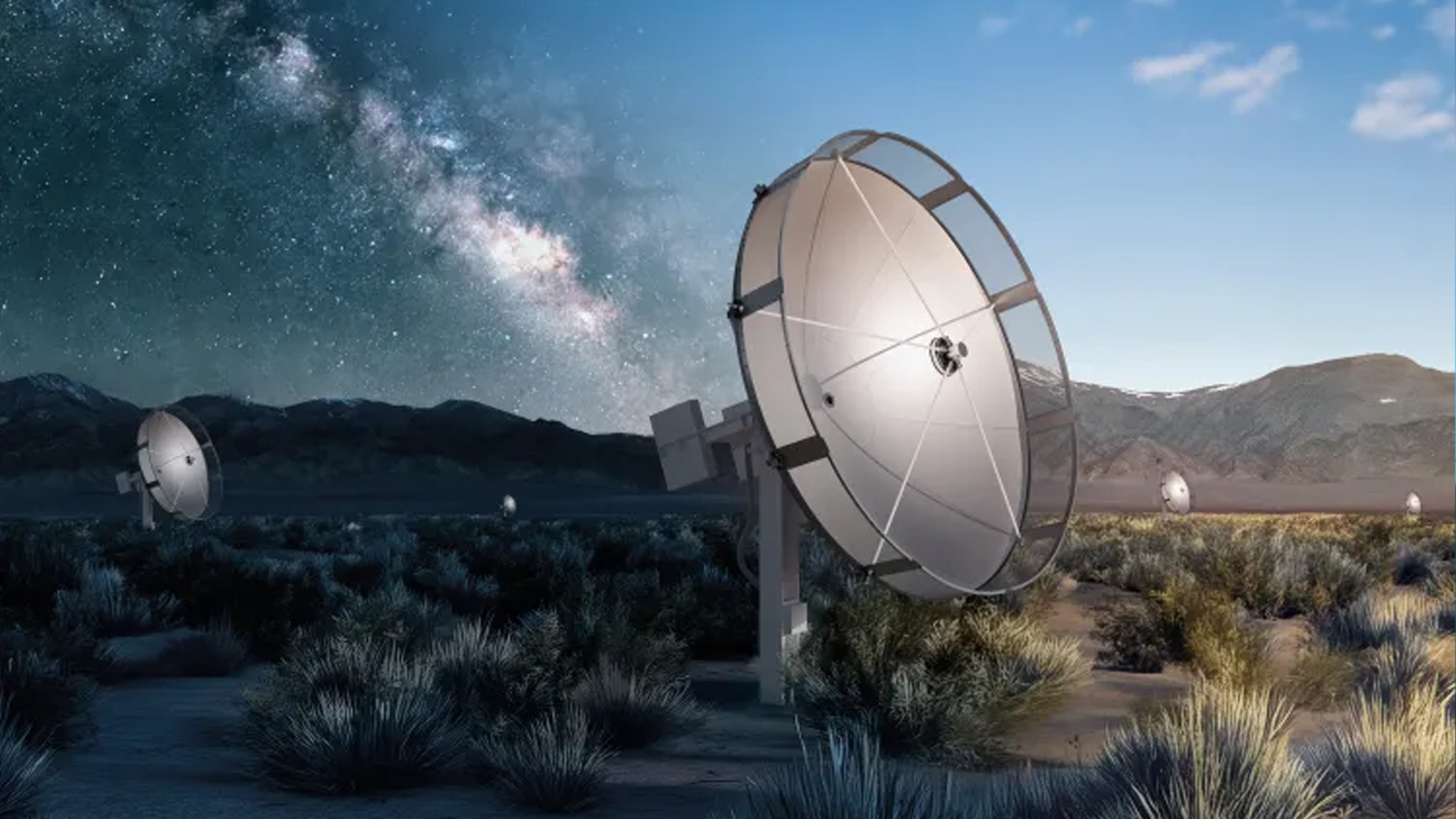
The ambition of the project extends firmly back to Earth with the construction of three cutting-edge ground facilities. The Argus Array will link 1,200 telescopes in Texas to record continuous movies of the northern sky which will allow astronomers to rewind footage and watch supernovae unfold in real-time. A second site in Nevada will utilize 1,600 radio dishes to process cosmic data at speeds that exceed the traffic of global streaming platforms.
• Three ground-based facilities complement the space telescope
• The Argus Array creates rewritable movies of cosmic events
• Thousands of radio dishes will process massive amounts of data
Development timelines for this initiative are set to shatter the slow pace typical of federal aerospace projects. Managers intend to move from concept to launch in under five years by utilizing commercial heavy-lift rockets and the latest in artificial intelligence processing. The system also includes a spectroscopic instrument called LFAST which groups twenty mirrors together to hunt for biological signatures on distant worlds. This rapid iteration stands in stark contrast to NASA missions that often span decades.
• Project leaders aim to launch hardware in less than five years
• Commercial rockets and AI allow for cheaper and faster development
• The LFAST instrument is designed to hunt for alien biosignatures
Financial risks are being shouldered entirely by the Schmidts in what is described as a pure gift to humanity. Data collected from this half-billion-dollar network of instruments will be made freely available to the global scientific community rather than sold for profit. This philanthropic model fills a critical gap left by academic funding constraints and allows for high-risk experimentation that national agencies are often too conservative to pursue.
• The project is a philanthropic gift with no commercial motive
• All data collected will be open and free for global researchers
• Private funding allows for high-risk scientific experimentation