What happens when the physics powering computing become the chains holding it back? The tech industry continuously battles an invisible enemy: intense heat generated by faster processing. Our data demands push silicon to its thermal edge. Recent breakthroughs suggest the answer lies in reimagining hardware architecture. Science proves we can alter foundational computing blocks to bypass these barriers entirely.
• Computing faces a massive thermal barrier.
• Faster processing yields more waste heat.
• Breakthroughs offer radical architectural alternatives.
Researchers in Japan engineered a non-volatile switching element processing information in trillionths of a second. This rapid function occurs without the intense heat crippling modern data centers. Utilizing ultrathin tantalum layers and antiferromagnetic materials, the device uses light pulses to alter electron spins. Trials recorded a billion reliable switches using minimal power. This invention could drastically slash global energy demands.
• A new device processes data in 40 picoseconds.
• The tech utilizes light pulses and magnetic materials.
• It operates cooler than standard processors.
Another leap increases chip density through a novel three-dimensional stacking technique. Traditional manufacturing cannot stack transistors since high temperatures destroy underlying layers. Engineers bypassed this by transferring ultra-thin silicon sheets via a low-temperature roller. These flexible ten-nanometer sheets bond uniformly to create stacked functional layers. This method allows engineers to safely triple circuit density.
• Engineers successfully stacked silicon transistors in 3D.
• Thin silicon sheets transfer via a cold roller.
• The approach prevents heat damage to underlying circuits.

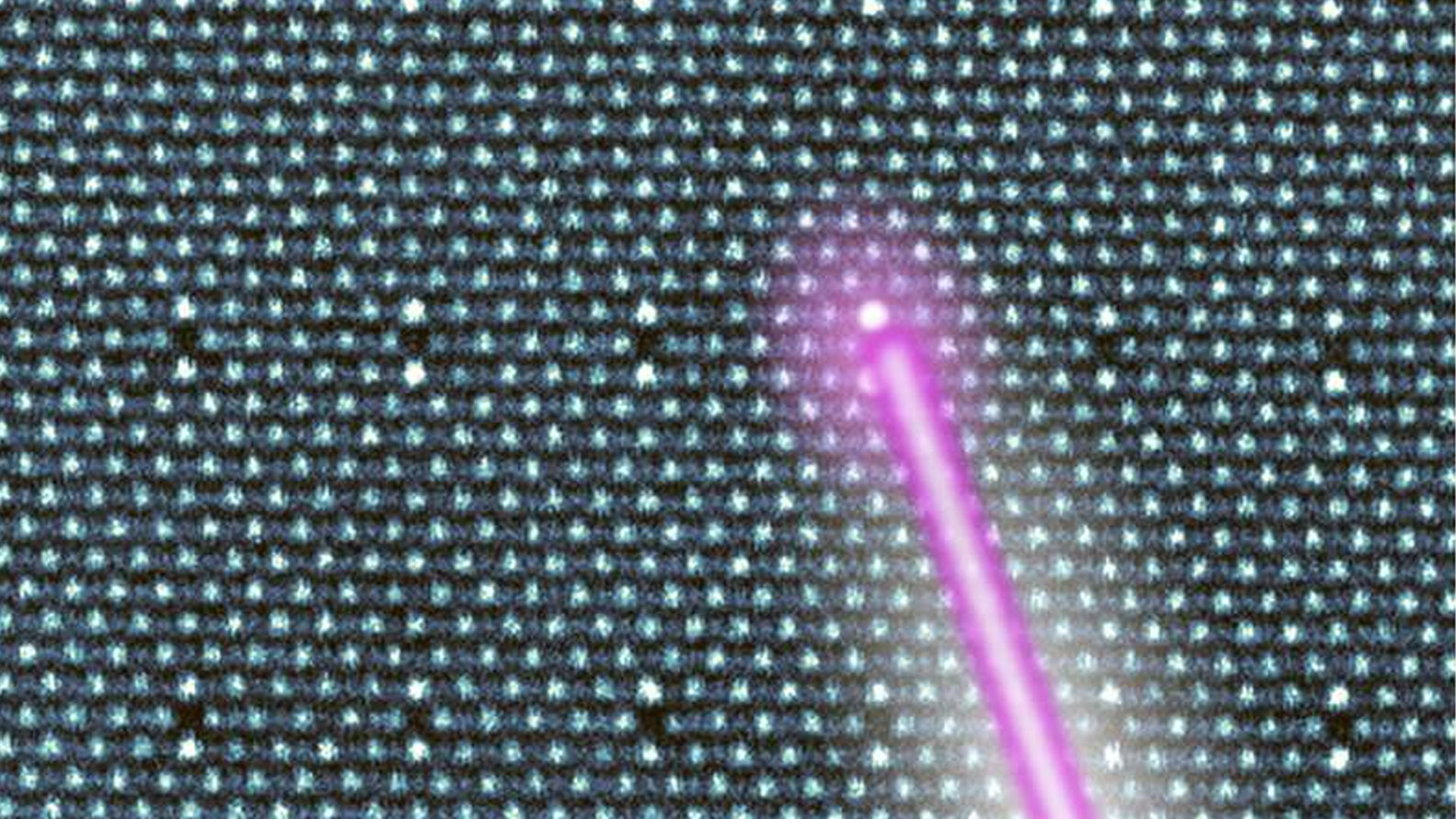
Scientists are also reprogramming matter at the atomic level. Older manipulation methods were agonizingly slow and restricted to freezing vacuums. A new technique utilizes algorithms to steer electron beams, relocating thousands of atoms inside materials at room temperature. This precision creates atomic vacancies that grant materials tunable properties. Such rapid defect generation lays the groundwork for advanced quantum technologies.
• Algorithms steer electron beams to move internal atoms.
• Thousands of atoms shift at room temperature quickly.
• The process creates programmable matter for quantum use.
These milestones signal a monumental shift in hardware engineering. Processing data ultra-fast, stacking circuits efficiently, and writing quantum patterns into crystals were once science fiction. Scaling these laboratory successes into commercial manufacturing remains the next major hurdle. Rare metal shortages and industrial wafer scaling present genuine logistical tests. Surmounting these barriers will redefine computing limits forever.
• Laboratory successes must transition to commercial scale.
• Material shortages present genuine industrial hurdles.
• These innovations promise to redefine global computing.
Via: PHYS