What happens when the disembodied intellect within our screens suddenly stands up and walks out the front door? Tech giants spent the last half decade teaching artificial intelligence how to speak, write, and think in the digital realm. A profound shift is now underway as the industry attempts to give these digital minds a physical body capable of lifting, sorting, and building in the real world. Silicon Valley is abandoning the confines of the screen to unleash autonomous machines into our physical spaces.
• Tech giants are moving artificial intelligence out of digital screens.
• The industry spent years perfecting language and thought models.
• The new focus is giving digital minds physical bodies for real world tasks.
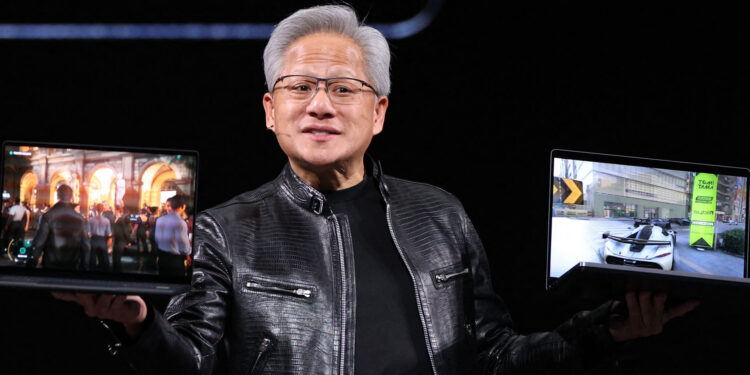
The speed of this mechanical evolution was on full display this past weekend during a major industry gathering. The latest technological showcase in Taipei revealed that the biggest developers are rapidly converging on humanoid designs. One leading chip manufacturer unveiled a standardized blueprint designed specifically for academic researchers to accelerate robotic development. This foundational model is slated for release in late 2026 to help universities test new physical capabilities.
• A major industry event in Taipei showcased rapid robotic advancements.
• Leading developers are converging on humanoid robot designs.
• A standardized blueprint for academics will be released in late 2026.
A major pioneer in generative artificial intelligence has officially declared robotics as the absolute next frontier for their operations. The leader of this prominent organization recently issued a public call for engineering talent to join their expanding hardware division. The announcement signifies a pivot from purely software based achievements to tangible mechanical engineering. The aggressive recruitment strategy indicates that the race to build physical vessels for these cognitive models is accelerating drastically.
• A major artificial intelligence pioneer declared robotics their next frontier.
• The organization issued a public call for new engineering talent.
• The strategic pivot moves focus from software to physical engineering.

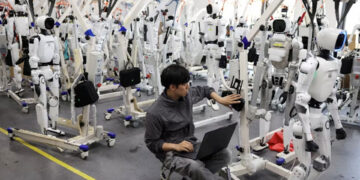
The immediate strategy for these mechanical entities involves assisting human professionals on complex job sites. Developers are prioritizing robots capable of supporting skilled labor to construct the infrastructure of tomorrow. These machines will initially deploy in industrial environments where heavy lifting and repetitive sorting are essential daily tasks. Deploying early models into controlled work environments allows engineers to refine their motor skills before introducing them to the general public.
• Early robotic models will assist human professionals on job sites.
• Developers prioritize machines supporting skilled labor for infrastructure construction.
• Controlled industrial environments will help refine robotic motor skills.
The ultimate vision extends far beyond massive construction sites and warehouses. The long term ambition across the technology sector is to place a personal robot inside every ordinary household. These personal assistants would be designed to perform any conceivable task required by their owners. Such a reality would fundamentally transform daily human life by merging advanced cognitive software with limitless physical utility.
• The ultimate vision involves putting a personal robot in every home.
• Personal assistants would perform a wide variety of daily chores.
• Daily human life would transform through this combination of cognition and utility.
Via: Business Insider