Imagine a clock that ticks endlessly without ever needing a power source. While this sounds like impossible magic from a science fiction novel, the quantum world has a peculiar phenomenon that defies our everyday logic. Physicists theorized a unique state of matter called a time crystal over a decade ago. These bizarre structures possess a repeating pattern not in physical space, rather across time itself. They remain in their absolute lowest energy state while maintaining a constant rhythm of motion.
• A theoretical clock without power.
• Time crystals repeat patterns over time.
• They maintain constant motion at lowest energy.
Scientists have recently achieved a monumental leap by successfully connecting one of these temporal anomalies to an external device. Previous experiments confirmed time crystals exist, yet their fragile perpetual motion would collapse if disturbed by outside energy or observation. Researchers at Aalto University devised a clever method to link a time crystal to a mechanical oscillator. This marks the first instance where a time crystal has been tethered to an optomechanical system without instantly destroying its delicate state.
• Scientists connected a time crystal to a device.
• Previous observation would destroy the motion.
• Researchers linked it to a mechanical oscillator.
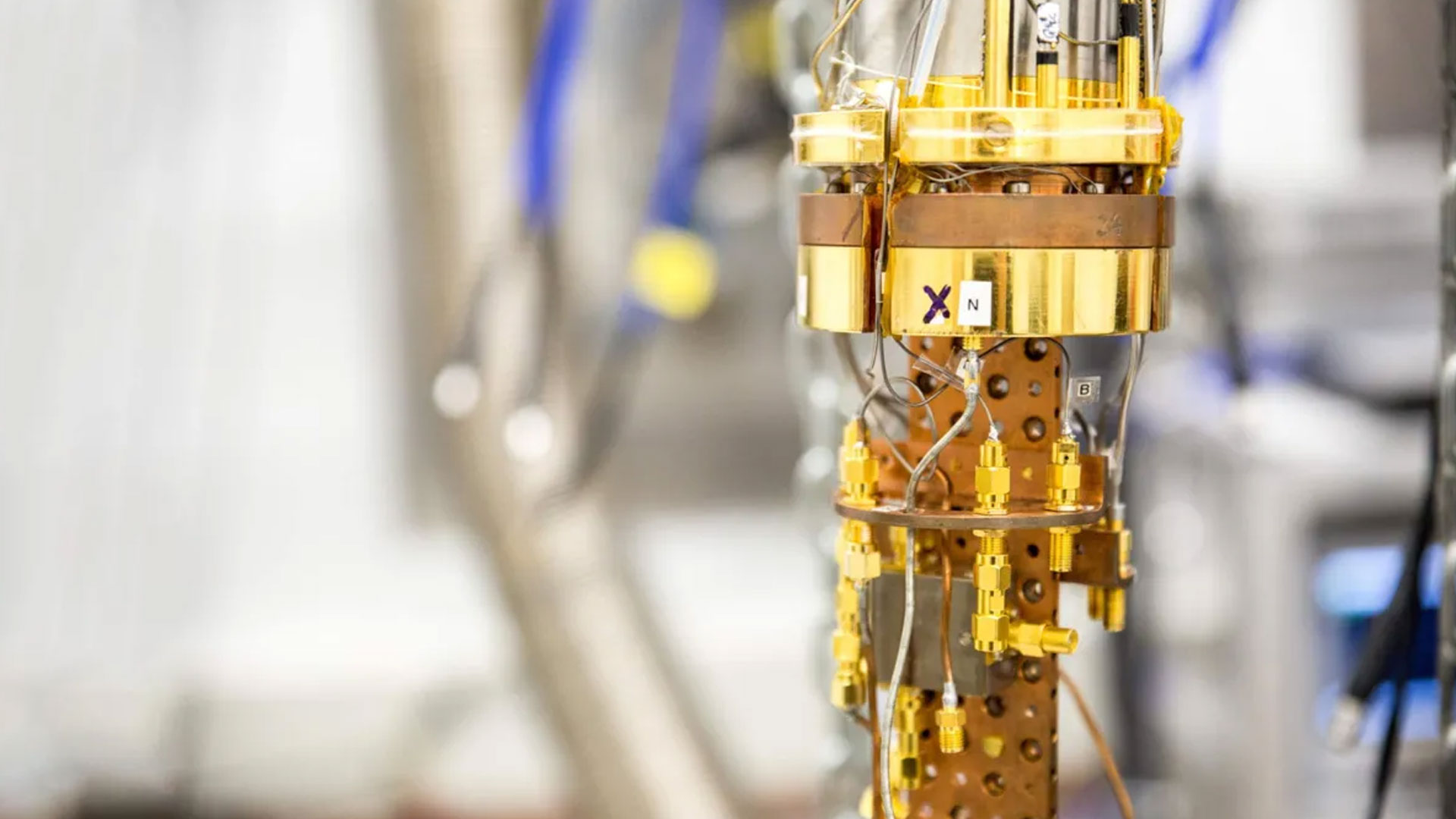
The experimental setup required extreme conditions to coax the matter into the correct state. The scientific team chilled a Helium 3 superfluid to a fraction of a degree above absolute zero. They then blasted it with radio waves to introduce quasiparticles known as magnons into the fluid. Once the radio transmission ceased, these particles spontaneously arranged themselves into a functioning time crystal. This crystal sustained its rhythmic oscillation for hundreds of millions of cycles before slowly fading away.
• Helium 3 was chilled near absolute zero.
• Radio waves injected magnons into the fluid.
• The crystal survived millions of cycles.

During its prolonged lifespan, the fading crystal interacted directly with the adjacent mechanical oscillator. The research revealed that the shifting frequency of the time crystal mirrored established optomechanical physics. Similar principles currently allow massive observatories to detect faint ripples in gravity across the universe. Harnessing this interaction provides a novel mechanism to actively control or tune the properties of the crystal. Scientists can now adjust the temporal rhythm of the system by altering the nearby oscillator.
• The fading crystal interacted with the oscillator.
• The physics mirror gravity wave detection.
• Scientists can now tune the crystal rhythm.
Mastering this technology opens extraordinary pathways for advanced computing and measurement tools. Quantum computers currently struggle with memory stability as their delicate states decay almost instantly. Time crystals persist for significantly longer durations than standard quantum systems. Utilizing these structures as memory cores could revolutionize the processing capabilities of advanced computers. Furthermore, their extreme precision makes them ideal candidates for creating hypersensitive measurement devices.
• The tech improves next generation computing.
• Time crystals offer stable quantum memory.
• They can create extremely precise sensors.
Via: Science Daily