What if the biggest battle in robotaxis is not about who has the smartest AI, but who has chosen the right way to see the road? With Tesla preparing to unveil its Cybercab, Waymo is making a pointed case for its sensor-heavy approach, arguing that cameras and AI alone may not be enough to safely remove human drivers.
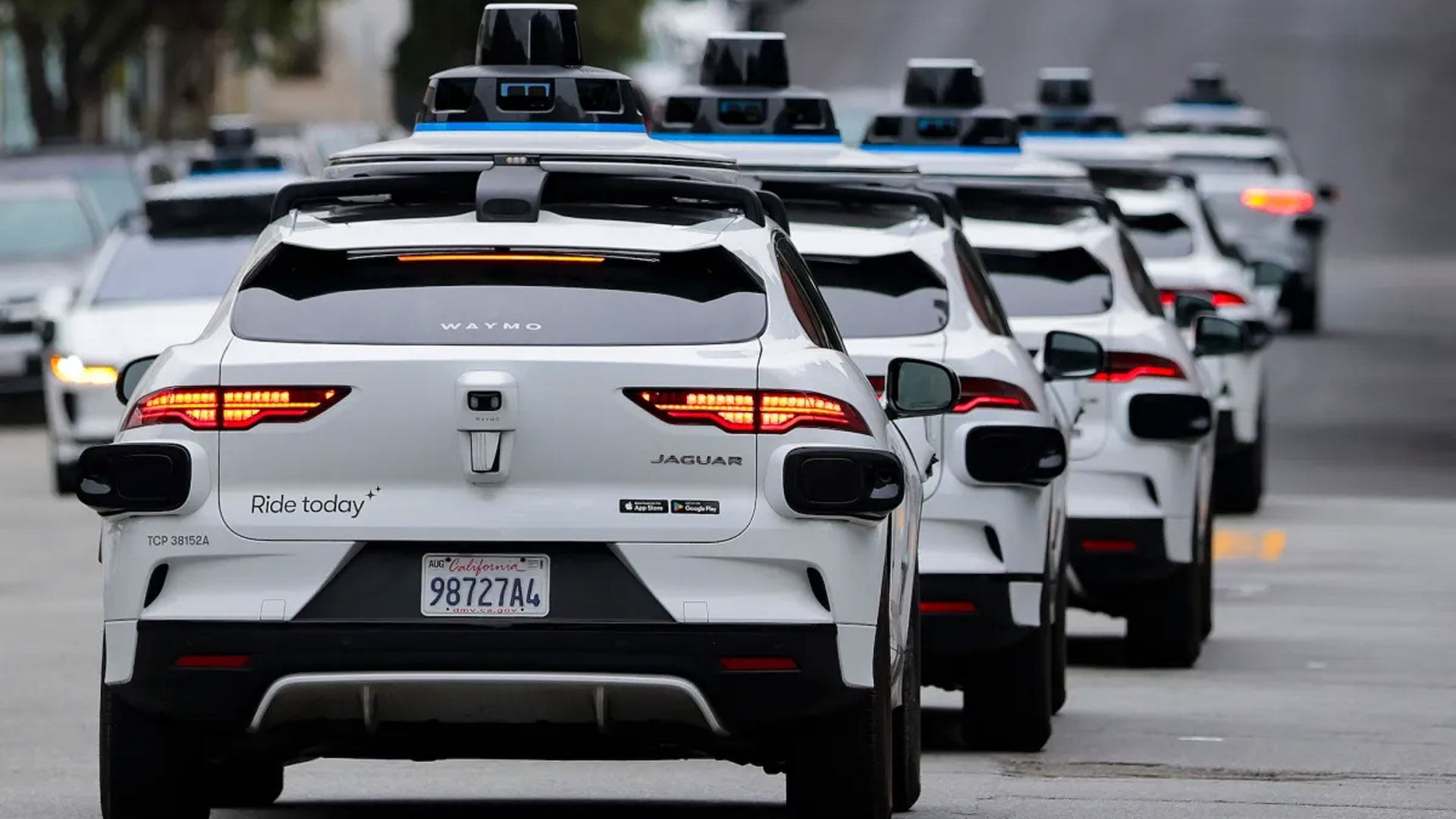
Waymo made its position clear just days before Tesla’s September 3 event, arguing that fully autonomous vehicles need multiple types of sensors and warning that purely end-to-end AI systems can create unpredictable failures. The Alphabet-owned company also announced three new markets, expanding a robotaxi service that now operates across more than a dozen U.S. cities.
• Waymo says cameras alone are not sufficient for full autonomy.
• The company relies on cameras, lidar and radar for redundancy.
• Waymo is expanding its robotaxi network ahead of Tesla’s event.

The timing has turned a long-running technology debate into a much bigger showdown. Waymo has accumulated more than 200 million real-world autonomous miles and operates roughly 4,000 robotaxis, while Tesla has spent years pursuing a radically different strategy built around cameras and AI. Tesla CEO Elon Musk has repeatedly dismissed lidar as unnecessary, making the two companies’ approaches almost complete opposites.
• Waymo has years of real-world autonomous driving data.
• Tesla is betting on an AI-first, camera-based system.
• The competing strategies could reshape the robotaxi industry.
Tesla’s Cybercab could now provide the ultimate test of that philosophy. The two-seat vehicle is designed without a steering wheel or pedals and is intended to operate autonomously from the start. Tesla has reportedly begun registering Cybercabs in Texas, while dozens have been spotted at locations around the country. The company is also targeting production of more than 125,000 Cybercabs annually, although the pace of deployment remains uncertain.
• Cybercab is designed specifically for autonomous operation.
• Tesla is preparing the vehicle for larger-scale production.
• The September 3 event could reveal Tesla’s next major step.
For Waymo, the challenge goes beyond proving that a car can drive itself. Robotaxis must handle emergency vehicles, school zones, bad weather and countless unpredictable situations without a human ready to intervene. Tesla’s smaller robotaxi trials have expanded cautiously, with the company only recently beginning to remove safety monitors from most vehicles. A successful Cybercab rollout would therefore need to demonstrate reliability at scale, not simply impressive demonstrations.
• Real-world autonomy involves far more than navigating normal roads.
• Tesla has so far operated its robotaxi trials on a limited scale.
• Scaling safely could be harder than demonstrating the technology.
There is also a powerful economic question hiding underneath the technology war: which approach can make driverless rides cheap enough for everyone? Waymo’s lidar, radar and specialized hardware add cost, while Tesla controls its own vehicle manufacturing and is betting that software and cameras can deliver the same result for less. If Tesla succeeds, its lower-cost strategy could put enormous pressure on Waymo and other robotaxi operators. The Cybercab may therefore be more than a new vehicle. It could be a verdict on two very different visions of the autonomous future.
• Tesla is betting that simpler hardware can mean lower costs.
• Waymo believes additional sensors are essential for safety.
• The winner could influence the future economics of robotaxis.
Via: Tech Crunch