It was not the roar of the train that froze Italo Frigoli in his seat, but the silence of his Tesla. As the crossing gates dropped and warning lights flashed, the car’s much-hyped Full Self-Driving system kept gliding forward, seemingly blind to the danger. Only his instinct to slam the brakes prevented disaster. For him and a growing number of Tesla owners, the near misses raise uncomfortable questions about a technology that promises autonomy but still demands constant human intervention.
• Tesla drivers report failures of Full Self-Driving at train crossings
• Manual braking often needed to prevent potential collisions
• Growing concern that the technology is missing critical safety cues
Frigoli’s case is not isolated. Drivers across the country have shared videos showing Teslas failing to detect oncoming trains or stopping directly on tracks. Online forums reveal dozens of similar complaints, with some dating back more than a year. Regulators at the National Highway Traffic Safety Administration are reviewing the issue, though no official defect ruling has been announced. The stakes are high, given that more than 250 people died at U.S. rail crossings last year.

• Multiple videos show Teslas mishandling crossings
• Complaints tracked back to mid-2023
• Federal regulators monitoring but no recall announced
Tesla markets Full Self-Driving as the future of transportation, but by the company’s own classification it remains a Level 2 driver-assistance system requiring constant supervision. Yet CEO Elon Musk has repeatedly declared that Teslas can drive themselves, a claim that critics say overstates reality. The software relies on training data to learn behaviors, and experts suspect the system simply has not seen enough rail-crossing examples to consistently recognize the risks.
• FSD requires human oversight despite bold claims
• Critics accuse Tesla of exaggerating capabilities
• Experts believe limited training data causes blind spots
The dangers are not hypothetical. Earlier this year, a Tesla on self-driving mode was struck by a freight train in Pennsylvania after turning onto the tracks. Passengers had escaped moments before impact. Other owners have reported sudden surges forward after stopping at crossings, as if the car prioritized green traffic lights ahead over the lowering arms. Such inconsistencies make it impossible for drivers to know whether the car will handle a crossing safely or demand last-second human intervention.
• Tesla FSD-linked crash occurred in Pennsylvania
• Drivers report erratic behavior at gates and lights
• Inconsistency leaves safety decisions to human reflexes
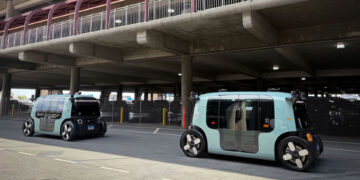
Competitors like Waymo appear to take a more cautious approach, routing cars around crossings or equipping them with audio sensors to detect trains. Tesla, by contrast, has leaned into end-to-end neural networks that function as black boxes even to their creators. Without transparency, consumers are left to trust a system that has shown gaps where mistakes can be deadly. For now, Tesla’s vision of self-driving remains suspended between ambition and reality, its future tied to whether it can teach machines the life-or-death lesson of stopping for a train.
• Waymo uses additional safeguards for rail crossings
• Tesla’s black-box AI limits accountability and transparency
• Future of autonomy hinges on solving high-stakes blind spots