It began with a robot stuck between snack tables, frozen beneath a blinking message that read “I’m stuck.” It wasn’t Rivian’s robot, and it wasn’t part of the plan, but its stalled wheels summed up the theme of Rivian’s autonomy showcase better than any scripted intro. This technology promises magic. It also reminds us how easily the magic can break.
• Stalled robot sets unintended tone
• Highlights difficulty of autonomy
• Sets stage for Rivian’s demo
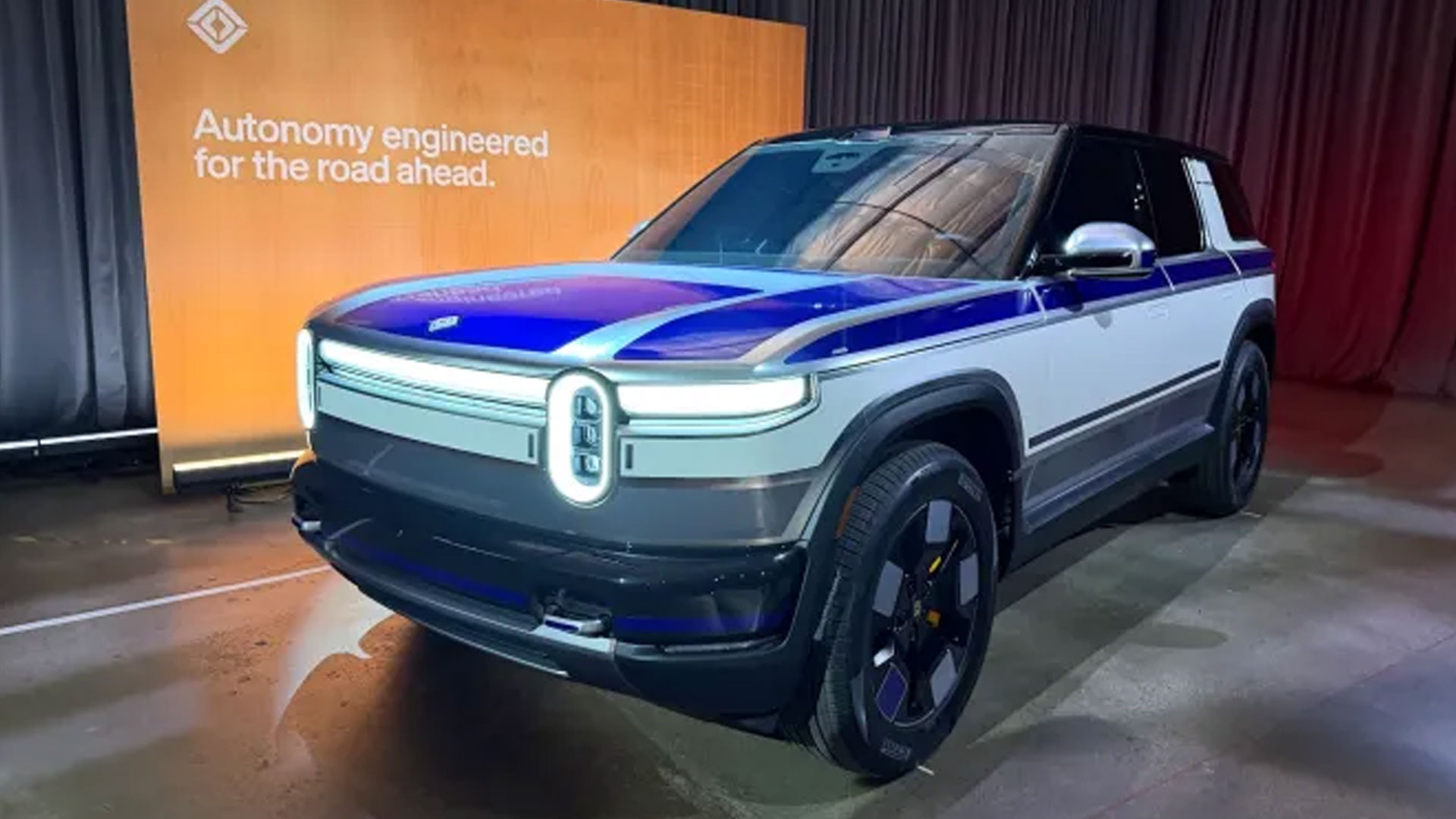
Hours later, in a 2025 R1S looping through Palo Alto, the same fragile balance played out on the road. The SUV could glide through turns, slow for bumps and process intersections without predefined rules. Yet it also hit moments of hesitation, including a hard brake behind a turning Tesla and a disengagement when a worker stepped into a narrowed lane. The progress was real, but so were the limits.

• Rivian demo shows promise and stumbles
• Vehicle handles basic maneuvers independently
• Occasional interventions still required
Rivian’s pivot to an end-to-end AI driving system began quietly in 2021, when CEO RJ Scaringe scrapped the old, rules-based architecture and rebuilt everything around modern transformer models. The company now trains its Large Driving Model using massive amounts of fleet data, betting that rapid scaling will let owners drive hands-free on millions of miles of painted roads this year and eventually reach point-to-point autonomy in 2026.
• Rivian rebuilt its autonomy system from scratch
• Training depends on large-scale fleet data
• Hands-free rollout planned for this year
The longer-term leap will come with Rivian’s R2 lineup. Those vehicles will ditch Nvidia processors for Rivian’s own autonomy computer paired with lidar, enabling future eyes-off driving, but the timing is messy. Early R2 buyers won’t get the hardware at launch, pushing some toward waiting and others toward upgrading later. The company must manage expectations while relying on the R2’s success to stabilize slowing sales.
• R2 lineup introduces new autonomy hardware
• Early buyers face delayed features
• Strong demand helps offset timing issues
Still, Rivian is holding onto its most ambitious dream. Years before the company delivered a single vehicle, Scaringe imagined a future where someone could hike a trail and have their Rivian meet them at the other end. He believes that remains within reach as the system learns more complex roads and conditions. True off-road autonomy is far away, but a truck navigating to a trailhead on its own may not be.
• Rivian still envisions advanced autonomy features
• Trailhead self-navigation seen as achievable
• Off-road autonomy not a priority