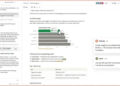
Does your digital assistant actually know you, or is it just guessing? Google aims to bridge that gap with the introduction of “Personal Intelligence” for its Gemini platform. This major update allows the AI to securely connect with a user’s personal ecosystem including Gmail, Google Photos, and YouTube to provide hyper-tailored responses. The feature is launching immediately as a beta for select subscribers in the United States and marks a significant shift from general web knowledge to personalized context.
- Google launched “Personal Intelligence” for Gemini
- The feature connects Gmail, Photos, and YouTube data
- It is currently a beta for U.S. subscribers
The core utility lies in the system’s ability to reason across fragmented personal data to solve immediate real-world problems. A user standing in an auto shop could ask for their tire size and the AI might pull the specific trim from a past email while simultaneously referencing a photo of the license plate to complete the transaction. This synthesis moves beyond generic web searches to answer questions that only a close family member or personal secretary could previously handle. It turns a static archive of emails and images into an active database of personal context.
- AI reasons across fragmented personal data sources
- It can retrieve specific details like license plates from photos
- The system synthesizes information to answer complex queries
Privacy concerns are addressed through a strict opt-in model that keeps control firmly in the hands of the user. Data processing occurs within Google’s existing secure infrastructure without sending sensitive information to third parties. Engineers have stated that the models are not trained directly on private inboxes or photo libraries but rather learn from specific prompts and obfuscated interactions. The system attempts to cite its sources so users can verify exactly where the AI found a specific piece of information.

- The feature operates on a strict opt-in basis
- Models are not trained directly on private inboxes
- Citations allow users to verify the data source
Early testing reveals that the technology still struggles with the nuances of human relationships and changing interests. Algorithms might incorrectly assume a user loves golf simply because they appear in hundreds of photos on a course even if they are only there to support a family member. Google is relying on user feedback to correct these “over-personalizations” and refine the model’s understanding of context. A simple thumbs-down or verbal correction allows the system to adjust its memory for future interactions.
- Algorithms may struggle with human nuance and context
- Over-personalization can lead to incorrect assumptions
- User feedback is required to refine the model
Access to this new layer of intelligence is currently restricted to the upper echelons of the subscriber base. The rollout is limited to Google AI Pro and AI Ultra users in the U.S. with plans to expand to free tiers and international markets over time. Enterprise and education users on Workspace accounts are excluded from this beta phase. This staggered release allows developers to monitor performance and stability before handing the keys to the general public.
- Access is limited to AI Pro and Ultra subscribers
- Enterprise and education accounts are excluded
- Expansion to free tiers will occur over time
Via: Google