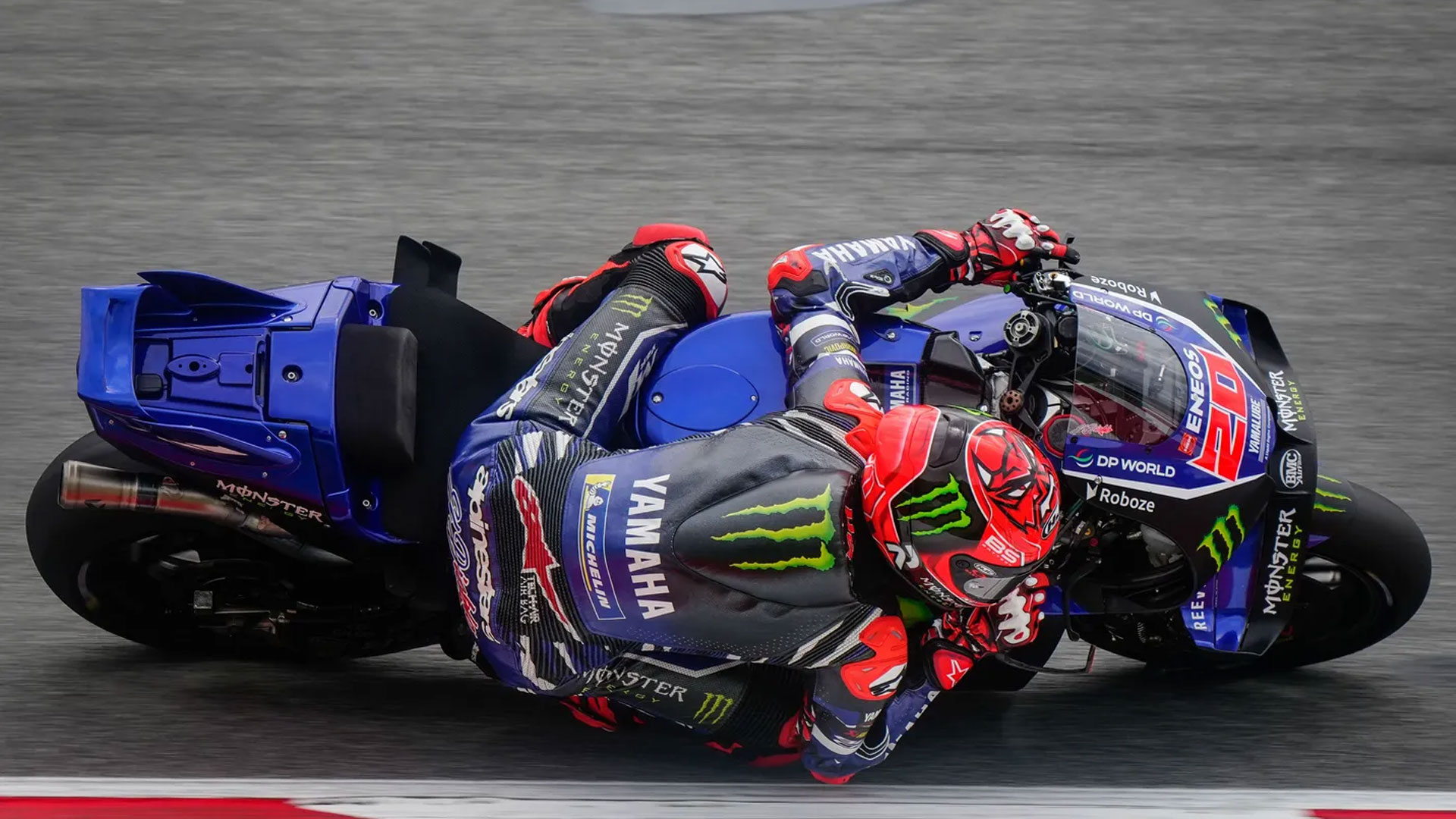
Imagine hurtling toward a hairpin turn at over 200 miles per hour on two wheels, knowing that staying upright requires leaning your body so low that your shoulder scrapes the asphalt. To the casual spectator, a MotoGP rider carving through a sharp bend looks like a localized glitch in gravity, an impossible act of daredevil bravery that should end in a devastating slide. Beneath the raw adrenaline lies a razor-sharp battle between mechanical engineering, pneumatic grip, and human intuition where every millisecond dictates survival. Mastering high-speed cornering requires an absolute sync between machine physics and rider technique, pushing both to the absolute brink of control.
• Riders rely on a delicate balance of physics, machinery, and human skill to negotiate tight turns at extreme speeds.
• Extreme lean angles appear to defy gravity but are backed by precise mechanical principles.
• High-speed cornering is the ultimate test of human intuition and advanced vehicle design working together.
Long before a bike reaches the apex of a bend, the deceleration phase sets the stage for a successful turn. Professional racers employ trail braking, gradually releasing the front brake lever only as they pitch the machine sideways, which compresses the front suspension and expands the tire contact patch. Once leaning at extreme angles reaching 65 degrees, riders shift their entire body weight off the seat, using dangling legs and planted knees to keep the center of gravity low without forcing the bike into an unrecoverable tilt. Exiting the bend requires surgical throttle application, matching engine power to the precise moment the chassis straightens to prevent rear-tire spin or catastrophic high-side flips.

• Trail braking transfers weight to the front tire, expanding traction right as the turn begins.
• Riders hang off the chassis to manage the center of gravity while limiting excessive lean angles.
• Accelerating out of a turn demands precise throttle control to avoid losing traction or flipping.
Tires serve as the foundational bedrock of this high-speed dance, operating under extreme thermal stress and immense load forces. Bespoke smooth slick tires lack tread patterns entirely, maximizing the square inches of high-friction rubber planted against the track surface. As temperatures soar to extreme levels during a race, these compound blends soften to grab the pavement, providing the vital friction needed to withstand violent sideways forces. Managing tire wear throughout a grueling Grand Prix distance remains a critical strategic task, as losing even a fraction of rubber grip drastically lowers maximum cornering speeds.
• Slick racing tires maximize rubber contact with the track by omitting traditional tread patterns.
• Extreme operating temperatures allow specialized rubber compounds to stick firmly to the asphalt.
• Tire degradation over a race distance constantly alters available traction and cornering limits.
Modern MotoGP prototypes rely heavily on complex electronic architectures and precise aerodynamic downforce to complement human skill. Specialized engine braking control stabilizes the rear wheel during harsh downshifts, while sophisticated traction control algorithms limit dangerous wheelspin during sudden acceleration. On-board anti-wheelie systems actively monitor front-end lift, allowing full power delivery without lifting the front tire off the ground. Aerodynamic fairings equipped with specialized winglets push the chassis downward into the tarmac, generating crucial stability that boosts rider confidence when entering high-speed bends.
• Sophisticated electronic suites assist with engine braking, traction control, and front-wheel stability.
• On-board systems process real-time telemetry data to assist the rider without completely replacing manual skill.
• Aerodynamic winglets generate essential downforce, keeping the chassis planted through fast sweeps.
Every single lap forces a rider to execute a series of high-stakes calculations involving track temperature, fuel depletion, tire degradation, and opponent positioning. Defending a racing position often requires taking tight, restrictive lines through corners to block attacks, whereas executing an overtake demands wider, sweeping trajectories to carry higher momentum. A tiny misstep in brake pressure or a millimeter error in throttle positioning will immediately break traction, sending machine and rider skidding across the run-off zone. This constant edge-of-a-knife balance between catastrophic failure and unmatched speed makes MotoGP cornering one of the most thrilling spectacles in modern motorsport.
• Tactical line selection changes depending on whether a rider is defending position or setting up an overtake.
• Environmental factors like fuel burn, tire wear, and track heat constantly alter cornering dynamics.
• Miniscule errors in rider input instantly transform a perfect cornering line into a crash.
Via: MotoGP