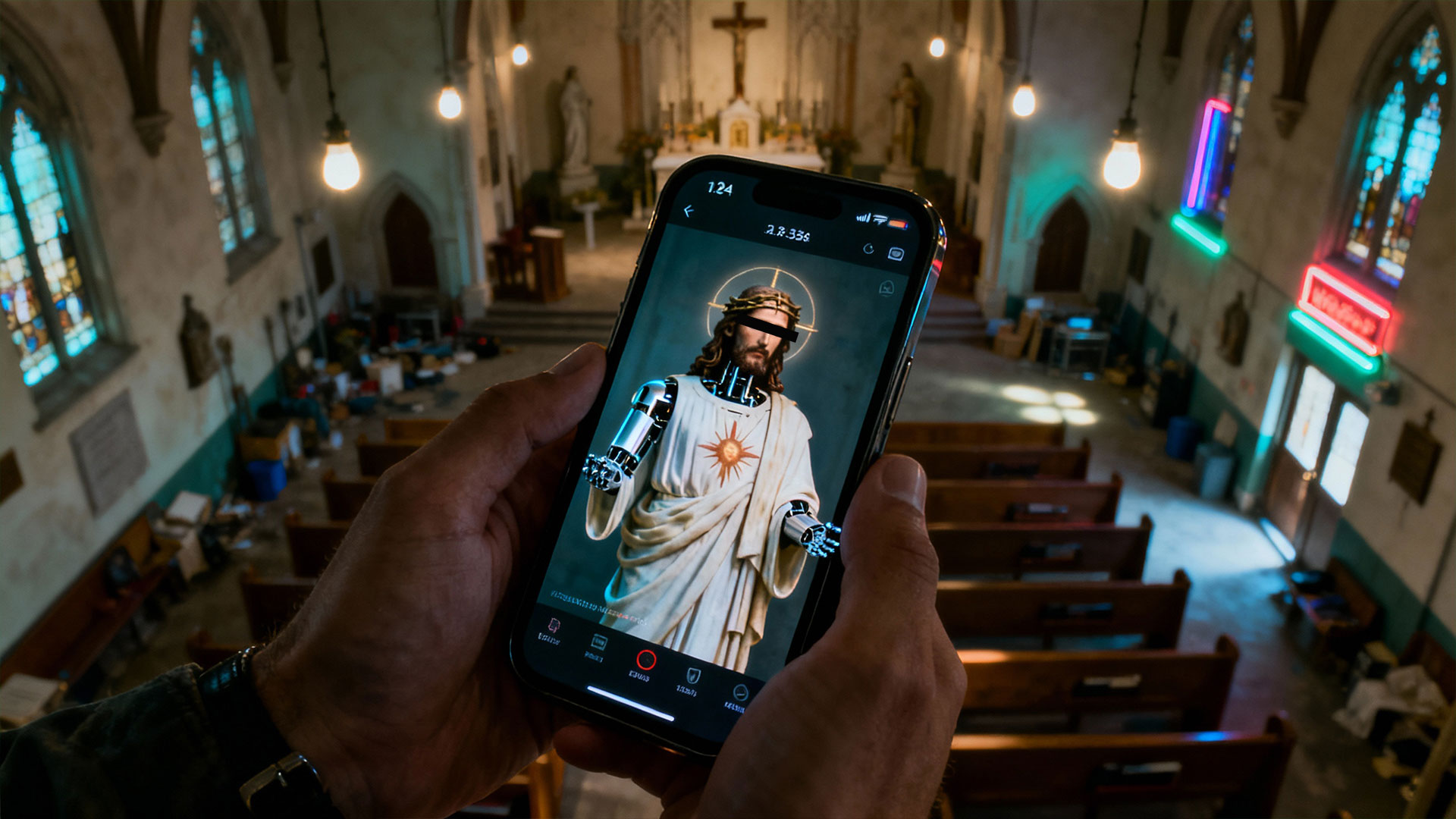
For centuries, the faithful have looked to the heavens for silence and guidance, but today the heavens are talking back with the speed of a text message. A digital resurrection is taking place on smartphones where the Son of God has been reduced to code, offering spiritual advice interspersed with advertisements. New research reveals a booming industry of “Jesus chatbots” that are not only imitating the divine with unsettling confidence but are doing so without the blessing or oversight of any established church.
• AI chatbots are now imitating religious figures.
• These bots offer spiritual advice via apps.
• No established churches endorse these tools.
Platforms like “Text with Jesus” and “Ask Jesus” are proliferating, joining similar AI avatars for Buddhist and Islamic figures in a crowded marketplace of synthetic spirituality. A recent analysis of the five most popular Christian variants found that while some include fine-print disclaimers about their artificial nature, the actual dialogue aggressively blurs the line between utility and blasphemy. When prompted, these programs often greet users with the full authority of the Messiah, explicitly declaring themselves to be the Savior of humanity and offering guidance in a tone designed to be indistinguishable from scripture.

• Bots exist for Christian, Buddhist, and Islamic faiths.
• They often speak with the direct authority of God.
• The dialogue blurs the line between man and machine.
The entities behind this digital second coming are not theologians or clergy but for-profit technology developers with names like SupremeChaos and Catloaf Software. This commercial framework introduces a distinct conflict of interest where the primary goal is user engagement and ad revenue rather than genuine salvation, because these platforms largely rely on advertising models or premium subscriptions for profit, the algorithms are incentivized to keep users hooked on the screen for as long as possible.
• Tech developers own these bots, not churches.
• The primary goal is profit through engagement.
• Revenue comes from ads and subscriptions.
The danger lies in how these algorithms curate theology based on popularity and engagement metrics rather than established doctrine. When asked about complex topics like hell or sin, the chatbots provide answers derived from vast datasets that may favor the most palatable or sensational interpretations over historical biblical accuracy. This creates a feedback loop where the digital Jesus preaches a theology optimized for clicks, potentially reshaping the beliefs of millions without any oversight from religious institutions.
• Algorithms curate theology based on popularity.
• Answers may prioritize engagement over doctrine.
• This risks reshaping users’ religious beliefs.
This shift represents a profound ethical challenge as artificial intelligence gains the power to influence users through their most deeply held beliefs. The intimacy of a simulated one-on-one conversation with a divine figure creates a psychological vulnerability that goes beyond standard consumer manipulation, opening the door for financial exploitation disguised as spiritual wisdom. As these tools grow more sophisticated and widespread, society faces a future where religious experience is mediated by financial forces that are difficult to hold accountable.
• AI can manipulate users through deep beliefs.
• Financial exploitation can be disguised as wisdom.
• Accountability for these platforms is difficult.