

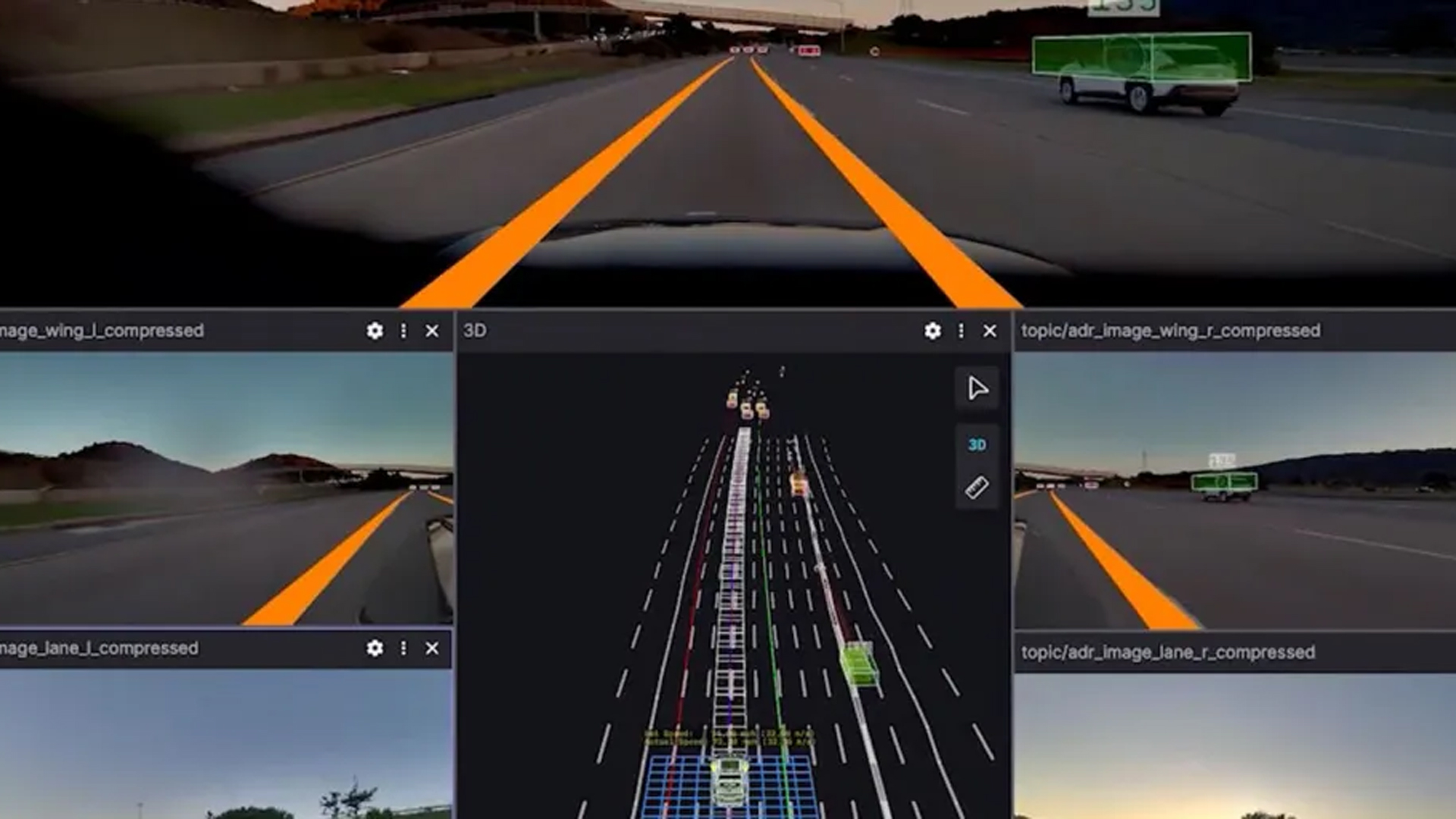
Imagine a machine that evolves while you sleep, waking up with new reflexes and a sharper mind. The latest software update for Rivian’s Gen 2 R1S and R1T vehicles turns this concept into reality by introducing a feature that fundamentally changes the handshake between driver and autopilot. The new “Co-Steer” capability allows drivers to gently nudge the vehicle within its lane to avoid obstacles or create space without breaking the spell of the Enhanced Highway Assist. It transforms the driving experience from a rigid takeover protocol into a collaborative dance where human intuition seamlessly overlays algorithmic precision.
- Co-Steer allows manual lane adjustments without disengaging assist.
- The feature is specifically designed for Gen 2 R1S and R1T models.
- It creates a smoother transition between human and computer control.
The brain of the vehicle has also undergone a significant growth spurt regarding its perception of the world. Rivian has expanded the availability of its Enhanced Highway Assist by up to 50 percent on urban and suburban roadways, meaning the car can now handle complex environments it previously shied away from. A new perception model sharpens the vehicle’s ability to center itself in lanes, particularly when navigating tight curves that might have unnerved earlier software versions. This ensures that the invisible rails guiding the truck feel more solid and reliable than ever before.
- Enhanced Highway Assist availability has increased by 50 percent.
- New perception models improve performance on winding roads.
- Lane centering is now more robust in urban settings.
Beyond driving dynamics, the R1 platform is learning to act as its own economist by optimizing how it consumes energy from the grid. The new “smart scheduling” feature automatically manages charging sessions to take advantage of off-peak times when electricity is cheaper and cleaner. Owners can set their preferences in the mobile app, allowing the car to handle the math and potentially slash annual charging costs by over 20 percent. This turns the vehicle into an active participant in the home’s energy ecosystem rather than just a passive drain on the battery.

- Smart scheduling aligns charging with off-peak electricity rates.
- Owners can potentially reduce annual charging costs by 20 percent.
- The feature prioritizes the use of cleaner energy sources.
For audiophiles, the update reconstructs the soundstage of Gen 2 models to deliver a more visceral listening experience. Engineers have fine-tuned equalization and delays to create bass that feels richer and deeper without muddying the mix. The blending of Dolby Atmos content has been improved for every seat in the cabin, ensuring that passengers feel enveloped in sound rather than just listening to it. The interface itself matches this snap with increased touchscreen responsiveness that makes navigating media apps feel instantaneous.
- Gen 2 models receive significant audio equalization tuning.
- Dolby Atmos mixing is improved for all passenger positions.
- Touchscreen responsiveness has been boosted for media apps.
The update concludes with a laundry list of digital housekeeping that polishes the rough edges of ownership. Key fixes include resolving an issue where efficiency data would fluctuate wildly and ensuring that door handles present reliably even when Car Wash mode is active. Climate control has been hushed to reduce blower noise during start-up, and the vehicle now proactively monitors its 12V battery health to warn drivers before a failure occurs. These refinements prove that the true luxury of a software-defined vehicle lies in its constant pursuit of perfection.
- Bugs causing fluctuating efficiency data have been resolved.
- New alerts notify owners of 12V battery replacement needs.
- Climate control blower noise has been reduced during start-up.
Via: Electrek


