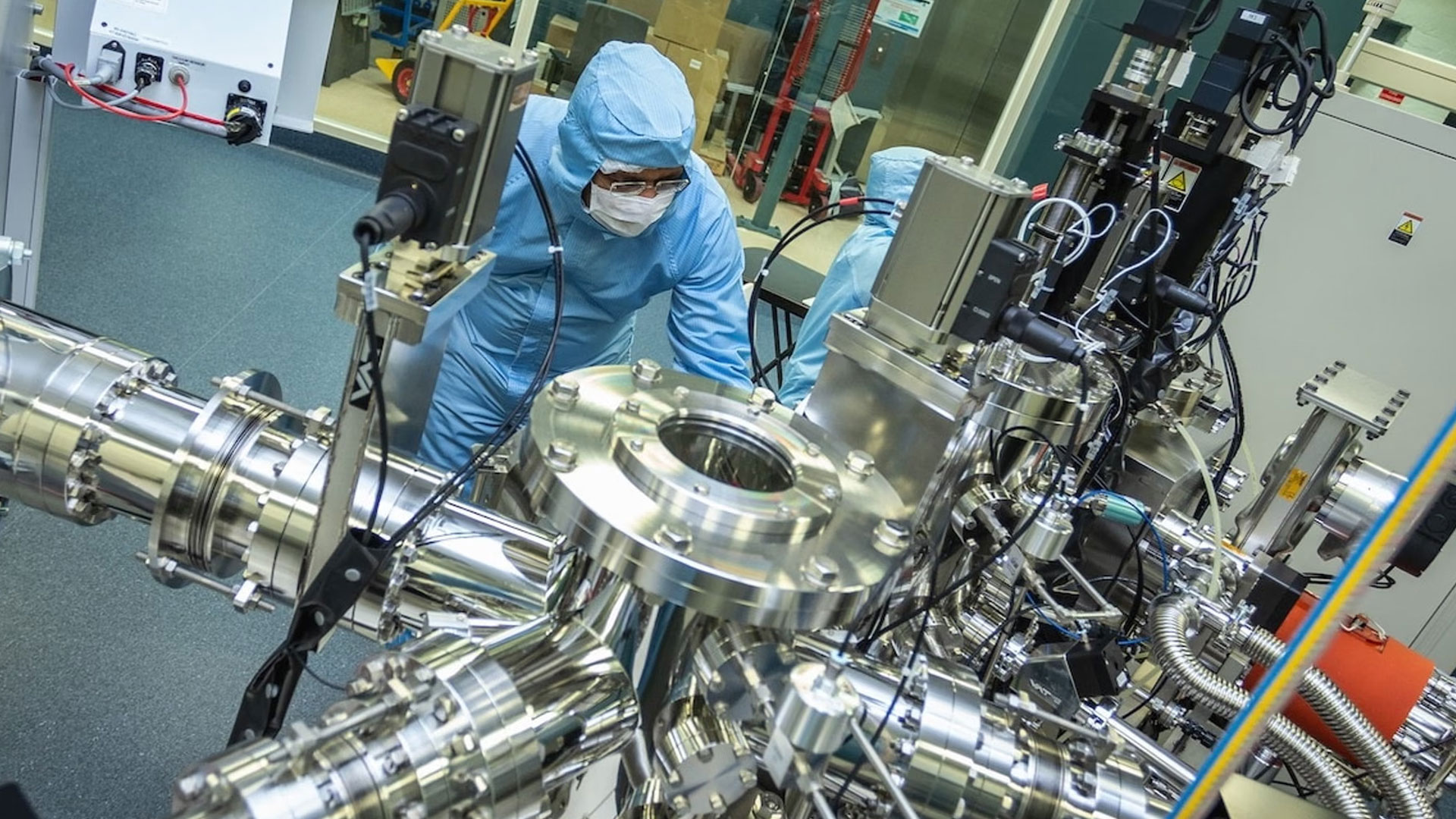
What if the fundamental laws of physics could turn the burden of battery size into its greatest strength? While every smartphone user understands the frustration of a slowing charge on a larger device, Australian researchers have successfully flipped this logic on its head. Scientists at the CSIRO have unveiled a proof-of-concept quantum battery that utilizes the bizarre principles of subatomic mechanics to store and release power. This prototype represents the first time a quantum system has completed a full cycle of charging, storage, and discharge. It marks a transition from a decade-old theoretical dream into a tangible piece of hardware.
• Australian scientists have built a functioning proof-of-concept quantum battery.
• The device successfully demonstrates a full cycle of charging and discharging.
• This project moves quantum energy storage from theory into a physical prototype.
Conventional batteries suffer from a linear limitation where a larger capacity inevitably demands a longer wait at the power outlet. Quantum batteries operate through a phenomenon known as collective effects where the charging speed actually accelerates as more cells are added to the system. This peculiar property suggests a future where an electric vehicle could theoretically charge faster than a handheld flashlight. The researchers originally proved this property existed years ago. They have only now developed a method to actually extract that energy for use.
• Charging times for quantum batteries decrease as the battery size increases.
• Collective effects allow multiple quantum cells to charge faster when grouped.
• Previous versions could demonstrate the charge but lacked a way to extract energy.
The speed of this new technology operates on a scale that defies human perception. This prototype requires only femtoseconds to reach its capacity which is a duration measured in quadrillionths of a second. Recent breakthroughs have pushed the storage duration significantly further than previous attempts. While the energy remained for only nanoseconds, this represents an improvement of six orders of magnitude compared to earlier tests. Scaling this ratio up could eventually mean a battery that charges in one minute might hold its power for several years.
• The prototype achieves a full charge in a fraction of a second.
• Energy storage time has improved by six orders of magnitude in recent tests.
• Current storage durations are still measured in nanoseconds as research continues.

Practical applications remain on the horizon because the current capacity is limited to a few billion electron volts. This tiny amount of energy cannot yet power a smartphone or even a simple lightbulb. The next phase of development focuses on extending the storage window to make the technology viable for everyday electronics. These batteries are unique because they receive power wirelessly via lasers rather than through traditional copper wiring. This opens the door for remote power delivery that could change how we interact with mobile technology.
• Current energy capacity is still too small for commercial electronics.
• Researchers are now focused on increasing the duration of the charge.
• Wireless laser charging eliminates the need for physical cables or plugs.
Imagine a drone that never has to land because it receives a burst of laser energy while soaring through the clouds. High-performance quantum computers will likely be the first systems to benefit from these batteries due to their need for coherent, low-cost energy delivery. Electric vehicles might one day receive a top-up while driving down the highway instead of idling at a charging station. The technology is currently in its infancy. It provides a glimpse into a world where power is instantaneous and wires are obsolete.
• Drones could potentially charge mid-flight using wireless laser technology.
• Quantum computers are the most likely early adopters of this power source.
• Future versions might allow electric vehicles to charge while in motion.
Via: The Guardian